Pottery & Stoneware · identification & value
Quimper Faience
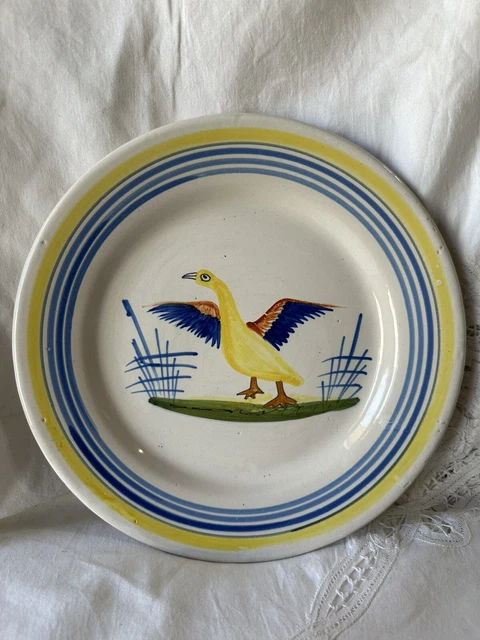
Faience has been made in the Locmaria quarter of Quimper since the late 17th century, when Jean-Baptiste Bousquet settled there from Provence. In the second half of the 19th century the factories found their best seller: the 'petit Breton', a peasant couple in costume painted in a few quick brushstrokes, which tourists carried home from Brittany.
1870–1970
Verified market data (US$)
$66 – $385 – $3,520
lowest · median · highest observed
French dealers asking on Proantic: €60–3 200 (median €350, 60 listings). (Proantic prices converted to USD at 1 EUR = $1.10.)
Expert tip
Turn the piece over and read the painted mark: 'HenRiot Quimper' with a decorator number, 'HB Quimper', or the AP monogram of Porquier; 'France' or 'Made in France' added to the mark generally points to export pieces from the late 19th or 20th century.
History
- Faience production in Quimper is dated to 1690; the Porquier factory's decorator Alfred Beau developed Breton scenes in the 1870s.
- Henriot became one of the three great houses; Henriot artists in the 1920s–30s included Mathurin Méheut. HB and Henriot were later merged into a single company.
Where it comes from
Quimper, Finistère (Brittany): the faience works of Locmaria — HB (Grande Maison), Porquier (AP mark) and Henriot.
Details to look at
- Painted marks and decorator numbers under the base.
- Decoration: petit Breton figures, blue-and-yellow borders, flowers, ermine tails.
- Soft tin glaze with small pits and kiln marks.
The market: most wanted
- Porquier (AP) and early HB pieces from the 1870s–1900s.
- Henriot Art Deco works by artists such as Mathurin Méheut.
- Large platters, figural pieces and Odetta stoneware by HB.
Authenticity: period piece or reproduction?
- Old Quimper glaze shows fine crazing and slight unevenness; brushwork is quick, not stiff.
- Marks are painted by hand, not printed transfers.
- Period pieces show a rough unglazed foot ring with three stilt marks.
- Warning signs: printed marks, 'Quimper style' pieces from other countries, crisp transfer decoration and modern pieces sold as 19th century.
Where to buy
- Brittany brocantes and auctions in Quimper and Rennes, Leboncoin, Catawiki and Saint-Ouen.
- eBay, Etsy and Replacements-type tableware dealers in the US; Quimper collectors' clubs and specialist dealers.
Buyer's checklist
- Painted mark
- Chips and repairs
- Crazing pattern
- Decorator number
Facts
- Typical size
- Plates Ø 15–30 cm · jugs H 10–30 cm
- Weight
- 0.2–2 kg
- Period
- 1870–1970
- Materials
- Tin-glazed earthenware (faience), stoneware
- US search interest
- 260 searches a month
Collector interest
US shoppers type 260 searches a month about quimper, spread over 1 keyword variants.
Related in Pottery & Stoneware
- Vintage Pottery
- Vintage Pitcher
- Antique Delft Pottery
- Delft Tiles
- Vintage Crock
- Vintage Majolica
- Stoneware Jug
- Antique Delftware
Go deeper: research notes
The Vintage Majolica & Faience: An Identification Guide gathers 11 sourced object studies, including:
- Minton’s Prometheus Vase: exhibition design and the date of an example
- The monkey teapot whose tail becomes a handle
- Fish-shaped majolica and the limits of a symbolic interpretation
See also: White Ironstone Pitchers, French Confit Pots.