Tableware & Kitchen Antiques · collecting guide
French Confit Pots
Confit pots are associated with the storage traditions of the French kitchen. Their rounded bodies, handles and glazed surfaces are useful starting points for description. Colour and a rustic appearance do not establish a specific workshop, age or region.
What to examine first
- Inspect the rim, handle roots and base for cracks and repair lines.
- Record where glaze ends and bare clay remains visible.
- Measure the opening and widest point of the body separately.
Names you may encounter
confit pot, French storage jar, glazed earthenware pot, pot a confit.
These terms help describe an object. They are starting points for research, not a certificate of age, origin or authenticity.
Related subjects
Research notes in this guide
- The toupine of Castellane: a local name and a recorded food residue
Regional names can add precision to the broad decorative label confit pot.
- A Beauvaisis fat pot excavated in Paris
The history of a storage pot can connect a production district with a very different place of use or discovery. Those locations should remain separate in its description.
- A confit pot in an Art Deco exhibition: the Cazaux example
The term confit pot is not confined to anonymous rustic storage pottery. A museum loan record places a named artist’s example in an Art Deco context.
- A glazed stoneware fat pot from Nancray: comparing regional storage vessels
French food-storage pottery includes forms beyond the familiar partly glazed confit pot. A museum example from Nancray offers a documented comparison in glazed stoneware.
- Measuring a confit pot: opening, body width and display footprint
A single height measurement does not describe the space needed by a confit pot. The mouth, swelling body, handles and base can all have different widths.
- Moving a confit pot without relying on its handles
The handles of a confit pot are part of its historical form, but they should not automatically be treated as secure lifting points.
- Confit pots as decorative vessels: planning for moisture
Using a confit pot as a decorative vessel creates a new history of use.
- Confit-pot rims and the evidence for a tied cover
The rim of a French confit pot can tell a different story from its glaze.
- Old repairs on a confit pot: seams, staples and the handling decision
A confit pot can preserve several histories at once: manufacture, use, damage and repair. A repaired handle or body seam deserves its own record.
- Confit pots in the pantry: reading a vessel through its storage setting
French confit pots are often displayed as isolated decorative vessels.
- French confit pots: vessel names, glaze and evidence
A confit pot belongs to the vocabulary of food storage, but the name should not be attached to every rustic glazed jar without examination.
Encyclopedia entries: identification & prices
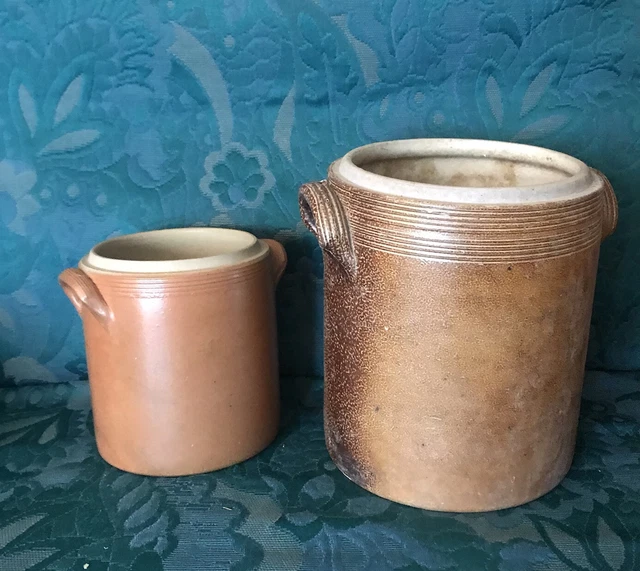
Vintage Crock
1800–1950 · $30–$1,500
Vintage Stoneware Crock
1800–1950 · asks around $32
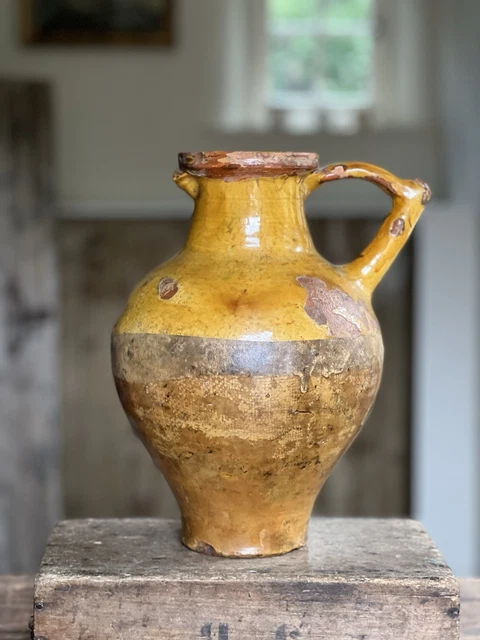
Vintage Stoneware
1700–1950 · around $495
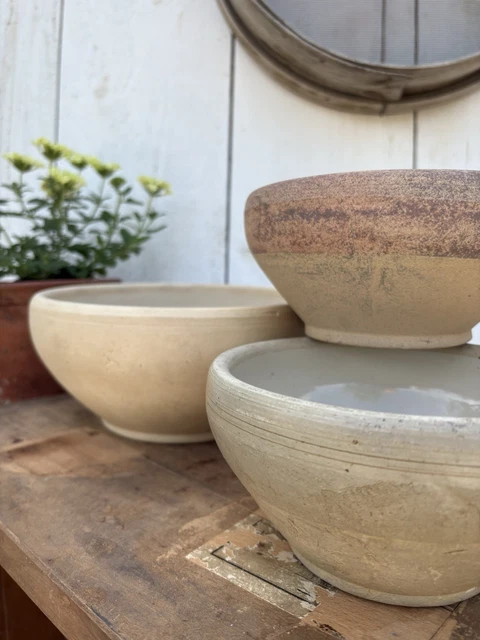
Antique Stoneware Bowl
1800–1960 · asks around $28
Stoneware Crock Lids
1820–1950 · asks around $20
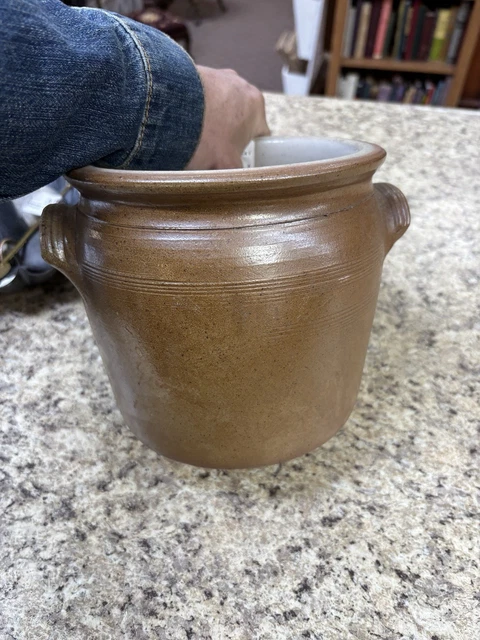
Gallon Stoneware Crocks
1860–1950 · asks around $119
Vintage Crockery
1820–1960 · asks around $29
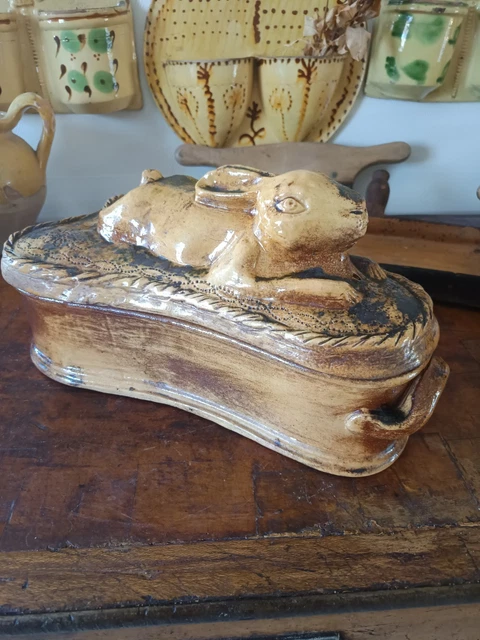
French Terrine
1770–1960 · around $605

French Confit Pot
1750–1950 · around $190
All entries in Pottery & Stoneware.