Pottery & Stoneware · identification & value
Vintage Pitcher
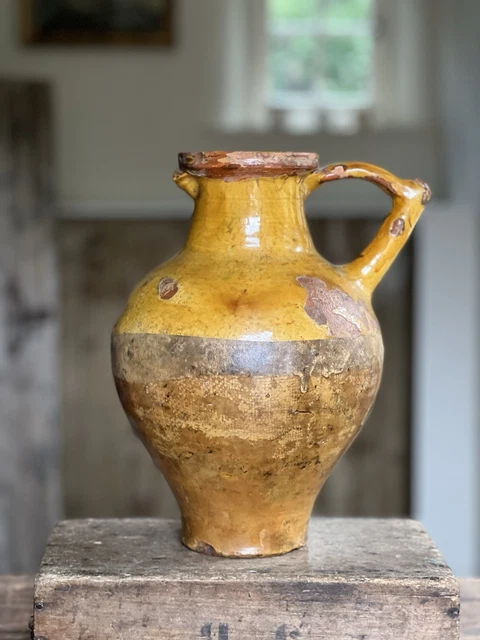
In Normandy farmhouses a pitcher of cider stood on the table at every meal; in Provence, a pitcher of water or wine. Each region had its own clay, glaze and shape.
1750–1960
Guide price (US$)
$30 – $120 – $800
low · typical · high, dealer level
Price tip: under $30 is a bargain worth checking twice; above $800, ask for provenance or a maker's mark.
Verified market data (US$)
$105 – $418 – $28,600
lowest · median · highest observed
French dealers asking on Proantic: €95–26 000 (median €380, 60 listings). (Proantic prices converted to USD at 1 EUR = $1.10.)
On eBay (via PicClick), 81 listings for “antique french pitcher” median asking price $140; median 3 watchers per listing.
Expert tip
Look at the handle join: a crack there means the pitcher should not be used for liquids.
History
- Pitchers were made in faience, stoneware, pewter and glass.
Where it comes from
Normandy and Brittany for cider pitchers; all France for faience and pewter.
What sets the price
Material, maker.
Details to look at
- Handle joins.
- Glaze.
- Marks.
The market: most wanted
- Regional faience pitchers.
- Pewter pitchers with marks.
- Barbotine figural jugs.
Authenticity: period piece or reproduction?
- Glaze wear and marks.
- Warning signs: modern copies.
Where to buy
- French brocantes.
- The guide range is $30–800.
Buyer's checklist
- Handle
- Chips
- Crazing
- Mark
Facts
- Typical size
- H 15–35 cm
- Weight
- 0.5–2.5 kg
- Period
- 1750–1960
- Materials
- Faience, stoneware, pewter, glass
- US search interest
- 6,910 searches a month
Collector interest
US shoppers type 6,910 searches a month about pitcher, spread over 159 keyword variants.
By style, searches lean to farmhouse (60), art deco (40), retro (20).
The materials buyers name are glass (1,880), copper (1,480), stoneware (320), enamel (230).
Related in Pottery & Stoneware
- Vintage Pottery
- Antique Delft Pottery
- Delft Tiles
- Vintage Crock
- Vintage Majolica
- Stoneware Jug
- Antique Delftware
- Vintage Stoneware Crock
Go deeper: research notes
The White Ironstone Pitchers: An Identification Guide gathers 11 sourced object studies, including:
- Flow blue and ironstone: colour effects do not identify the ceramic body
- Identifying an ironstone pitcher through a teapot
- New York shape: an English ironstone pitcher with an American place-name
See also: Vintage Majolica & Faience, French Confit Pots.