Porcelain & Faience · identification & value
Vintage Dinner Plate
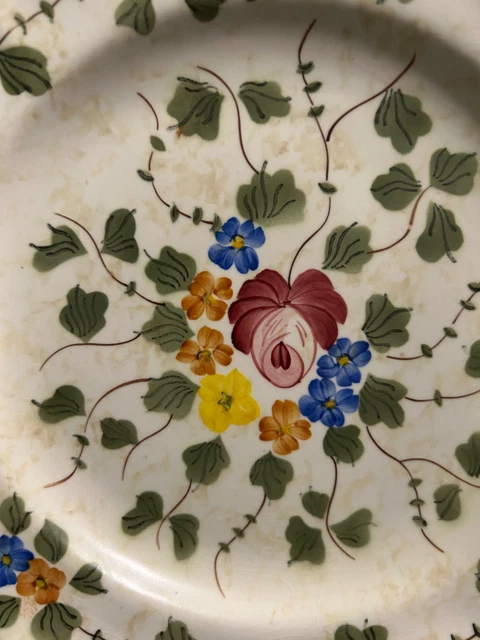
French dinner services were built for long meals: deep soup plates, flat dinner plates, dessert plates and serving dishes, often in sets of twelve. In the 19th century the faience factories of Gien, Sarreguemines and Creil printed scenes, flowers and La Fontaine's fables onto earthenware so that the middle classes could set a full table.
1820–1960
Expert tip
Turn the plate over: the back stamps of Gien, Sarreguemines and Creil et Montereau changed over the decades, so identifying the exact version lets you date the plate within a few years and spot a later reissue.
History
- Gien was founded in 1821; Creil and Montereau produced transfer-printed earthenware in the 19th century.
- Sarreguemines made dinnerware in vast quantities through the 19th and early 20th centuries.
Where it comes from
Gien on the Loire (founded 1821), Sarreguemines in Lorraine, Creil and Montereau near Paris, Lunéville and Saint-Clément, Digoin and Quimper for faience and earthenware; Limoges for porcelain.
Details to look at
- The back stamp and pattern name.
- Glaze crazing, knife marks and staining in the crazing.
- The shape: flat, soup or dessert, and the rim profile.
The market: most wanted
- Early Creil et Montereau transfer-printed plates.
- Gien faience in historic patterns.
- Sarreguemines and Quimper hand-painted plates.
Authenticity: period piece or reproduction?
- Old faience shows crazing, kiln marks and slight warping.
- Transfer prints have fine engraved lines.
- Surface wear comes from knives and stacking.
- Warning signs: decals, uniform modern glaze and fake stamps.
Where to buy
- Brocantes, Leboncoin, Selency and Catawiki; the factory shop in Gien.
- In the US and UK, Replacements Ltd. for missing pieces, plus eBay and Etsy sellers who specialise in French faience.
Buyer's checklist
- Chips and cracks
- Back stamp
- Crazing
- Set count
Facts
- Typical size
- Ø 23–27 cm
- Weight
- 400–700 g
- Period
- 1820–1960
- Materials
- Faience, earthenware, porcelain
- US search interest
- 450 searches a month
Collector interest
US shoppers type 450 searches a month about dinner plate, spread over 38 keyword variants.
Style words in the queries: french country (30), art deco (20), victorian (20), chinoiserie (20).
Material searches favour ceramic (10).
Related in Porcelain & Faience
- Antique French Plates
- Vintage Oyster Plate
- Vintage Dish
- Limoges Porcelain
- Vintage Limoges China
- Vintage Ironstone China
- Vintage Dinnerware
- Antique Haviland China
Go deeper: research notes
The Vintage Oyster Plates: An Identification Guide gathers 11 sourced object studies, including: