Porcelain & Faience · identification & value
Limoges Porcelain
A surgeon's wife in Saint-Yrieix is said to have used a white clay to wash linen in the 1760s. Whatever the truth of the story, the kaolin found near Limoges in 1768 let France make true hard-paste porcelain, and within a century the town was its capital.
Since 1771; most collected 1850–1930
Guide price (US$)
$20 – $100 – $1,500
low · typical · high, dealer level
Price tip: under $20 is a bargain worth checking twice; above $1,500, ask for provenance or a maker's mark.
Expert tip
Read the marks: a green underglaze factory mark plus a red or brown overglaze decorator mark is typical of Haviland and the big houses.
History
- The first factories opened in the 1770s. In 1842 the American importer David Haviland set up in Limoges to make porcelain for the US market, and the town's output grew enormously.
- Bernardaud, Raynaud, GDA, Legrand and many smaller houses followed; 'Limoges boxes', small painted trinket boxes, became a collector category of their own in the 20th century.
Where it comes from
Limousin: Limoges and Saint-Yrieix, where kaolin was found in 1768.
What sets the price
Hand painting, maker, form.
Details to look at
- Marks on the base identify the factory and often the decorator; a 'France' mark alone usually means after 1891.
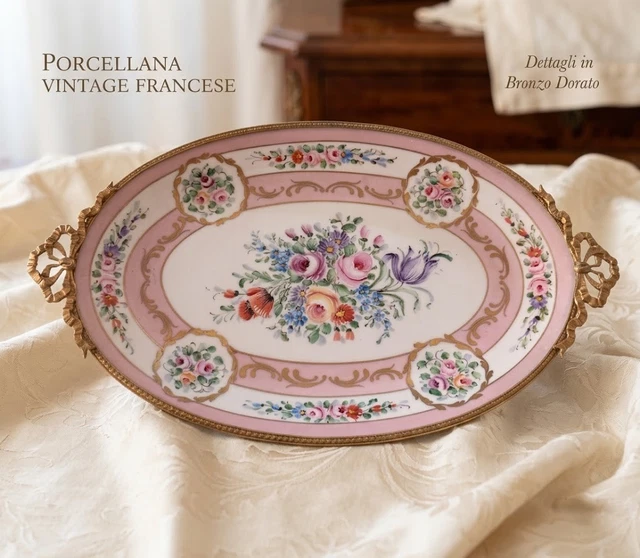
- Hand-painted decoration is worth more than transfer prints; look closely for brushstrokes.
- Complete dinner services sell for much less per piece than single decorative items.
The market: most wanted
- Haviland services from the 1870s–1890s with hand-painted or Japonisme decoration, and pieces designed by Félix Bracquemond for Haviland.
- Early Limoges (before 1850) from the Alluaud and Royal factories.
- Hand-painted cabinet plates and vases signed by the decorator.
Authenticity: period piece or reproduction?
- Marks: an underglaze factory mark (often green) plus an overglaze decorator mark (red, brown or blue). 'Limoges France' with 'France' in the mark dates after 1891.
- Hand painting shows brushstrokes, slight colour pooling and variation between pieces of the same set; transfer prints show dot screens under a magnifier.
- Gilding on old pieces is soft and wears on rims; bright, hard gold is usually modern.
- Warning signs: 'Limoges' printed on non-hard-paste wares, Chinese copies of trinket boxes with misspelled marks, and decorator marks without a factory mark.
Where to buy
- Antique markets across France carry Limoges at modest prices; the factories in Limoges have outlet shops.
- eBay and Etsy are full of Limoges plates and boxes; the guide range is $20–1,500.
Buyer's checklist
- Factory and decorator marks
- Hand-painted vs transfer
- Worn gilding
- Chips and hairlines
Facts
- Typical size
- Dinner plates Ø 24–27 cm; dessert Ø 19–21 cm; boxes 3–8 cm
- Weight
- Plate 0.3–0.6 kg
- Period
- Since 1771; most collected 1850–1930
- Materials
- Hard-paste porcelain, enamel colours, gilding
- US search interest
- 5,550 searches a month
Collector interest
Search demand for limoges porcelain reaches 5,550 US searches a month across 47 distinct queries.
By style, searches lean to art deco (30).
Most-searched materials: porcelain (1,540), gold (20).
Related in Porcelain & Faience
- Antique French Plates
- Vintage Oyster Plate
- Vintage Dish
- Vintage Limoges China
- Vintage Ironstone China
- Vintage Dinnerware
- Antique Haviland China
- Antique China
Go deeper: research notes
The Vintage Oyster Plates: An Identification Guide gathers 11 sourced object studies, including: