Porcelain & Faience · identification & value
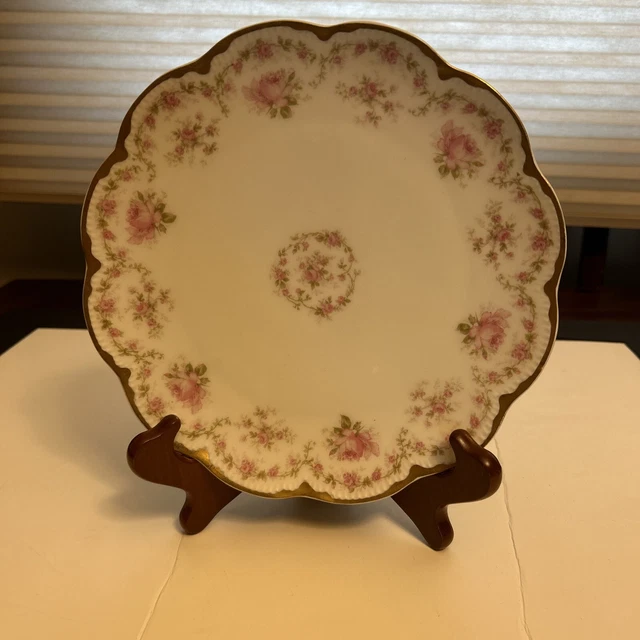
Vintage Cake Plate
For a Sunday lunch in a French house, the tart or the gâteau came out on a footed présentoir, in faience painted with flowers or in pressed glass that sparkled like crystal for a fraction of the price. In 1930s America, cake plates in pink and green Depression glass were given away as premiums or sold cheaply at five-and-dime stores, and they are among the most collected kitchen glass today.
1860–1960
Verified market data (US$)
$132 – $330 – $5,390
lowest · median · highest observed
French dealers asking on Proantic: €120–4 900 (median €300, 28 listings). (Proantic prices converted to USD at 1 EUR = $1.10.)
Expert tip
Shine a small UV torch on coloured glass: uranium (Vaseline) glass glows bright green, which confirms an old uranium formula; then turn the plate over and look for a ring of fine scratches on the foot from decades of use, which new reproductions lack.
History
- Portieux and Vallérysthal made pressed glass in Lorraine through the 19th and 20th centuries, including footed cake stands and covered dishes.
- American Depression glass was mass-produced from the late 1920s to the 1940s by makers such as Jeannette, Anchor Hocking and Federal.
Where it comes from
Lorraine and the Vosges for French pressed-glass cake stands (Portieux, Vallérysthal, Meisenthal); Gien, Sarreguemines and Limoges for faience and porcelain présentoirs; the American Depression-glass cake plates in many searches came from Ohio, Pennsylvania and West Virginia glassworks (Jeannette, Anchor Hocking, Federal, Indiana Glass).
Details to look at
- Form: flat plate with handles, footed stand, or covered cake stand with a dome.
- Glass: pressed patterns (diamonds, beads, hobnail), colours (pink, green, opaline).
- Ceramic: painted or printed decoration, maker's mark underneath.
The market: most wanted
- Portieux and Vallérysthal opaline and pressed-glass stands.
- Pink and green Depression-glass cake plates in known patterns.
- Gien and Sarreguemines faience présentoirs with painted decoration.
Authenticity: period piece or reproduction?
- Old pressed glass shows soft mould seams and a scratched, greyed foot ring; the pattern is sharp to the touch but not razor-edged like new glass.
- Depression-glass reproductions are often thicker, with muddier or too-bright pinks and greens and weak pattern detail; compare against a pattern guide such as Florence's.
- On faience and porcelain the factory mark is printed or impressed under the glaze, and Gien marks change by period, which dates the piece.
- Warning signs: modern pink glass sold as Depression, a new dome married to an old stand, glued or ground chips on the rim, and opaline with a plastic-like sheen.
Where to buy
- Brocantes, vide-greniers, Leboncoin and Catawiki for Portieux, Vallérysthal and faience présentoirs; Meisenthal still presses glass in old moulds, so ask for period pieces.
- In the US, eBay, Etsy, antique malls and Depression-glass shows; Replacements Ltd for matching patterns.
Buyer's checklist
- Chips on rim
- UV test
- Foot wear
- Marks
Facts
- Typical size
- Ø 20–32 cm · H 5–20 cm (footed)
- Weight
- 0.5–2 kg
- Period
- 1860–1960
- Materials
- Pressed glass, opaline, faience, porcelain
- US search interest
- 270 searches a month
Collector interest
Cake plate draws 270 monthly US searches, split into 47 keyword variants.
The materials buyers name are glass (50), crystal (10).
Related in Porcelain & Faience
- Antique French Plates
- Vintage Oyster Plate
- Vintage Dish
- Limoges Porcelain
- Vintage Limoges China
- Vintage Ironstone China
- Vintage Dinnerware
- Antique Haviland China
Go deeper: research notes
The Vintage Oyster Plates: An Identification Guide gathers 11 sourced object studies, including: