Clocks · identification & value
Wall Clocks with Pendulum
In a 19th-century Vienna office, the clock on the wall was a precision instrument: a tall glazed case, a long wooden rod pendulum and a brass bob swinging slowly behind the glass. The German factories later made the same look affordable, and the glazed wall clock went into kitchens and post offices across Europe.
1820–1930
Typical asking price on live listings
about $43
Median of current eBay asking prices (via PicClick); listings run from $8.75 to $2,595. Asking prices are not sold prices.
Expert tip
Open the case and read the back plate of the movement: Gustav Becker marked an anchor with 'GB' and a serial number, Junghans used a star; a French movement often bears a round stamp with the maker's name and medals, and the stamp tells you more than the case does.
History
- Vienna regulators were developed in Austria in the early 19th century, with fine weight-driven movements and wooden pendulum rods.
- Gustav Becker founded his factory in 1847 at Freiburg in Silesia; German mass production of spring-driven 'Vienna-style' clocks followed in the later 19th century, and Japy at Beaucourt supplied huge numbers of French movements.
Where it comes from
Vienna regulators from Austria; German wall clocks from Gustav Becker (Freiburg in Silesia), Junghans and the Black Forest; French wall pendulum clocks from Franche-Comté (Comtoise) and Paris-style movements by Japy at Beaucourt.
Details to look at
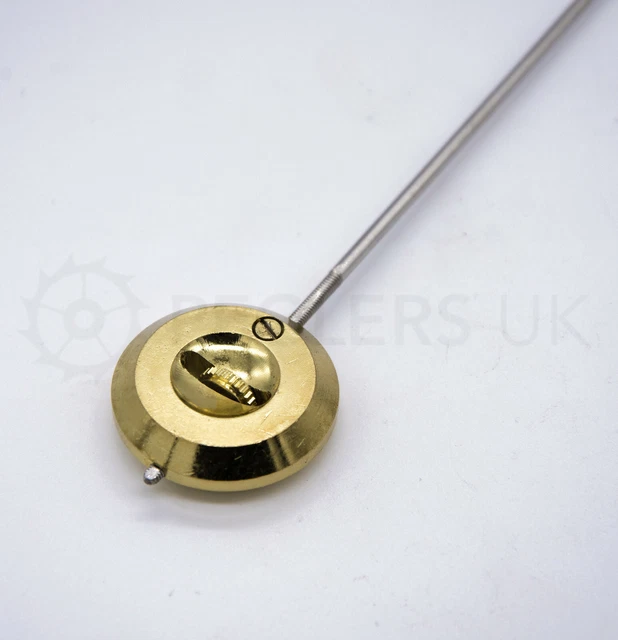
- Pendulum rod (wood or steel) and bob size; decorative gridiron rods on later clocks.
- Number of weights: one (timepiece), two (hour strike), three (quarter strike).
- Case style: Biedermeier, Gründerzeit with carved crestings, or plain school and railway clocks.
The market: most wanted
- Early Biedermeier Vienna regulators with fine weight-driven movements.
- Three-weight quarter-striking regulators.
- French œil-de-bœuf and Comtoise wall clocks in original condition.
Authenticity: period piece or reproduction?
- The pendulum, crutch and beat should match the movement; a wrong pendulum leaves the clock running fast or slow.
- Case glass held with old putty or beading and wavy glass on older examples.
- Dials: two-piece enamel dials on Vienna regulators, with matched bezels.
- Warning signs: a movement too small for the dial, new veneer on a 'period' case, and pendulums borrowed from other clocks.
Where to buy
- Brocantes and dealers in eastern France for German and Comtoise wall clocks; Proantic, Catawiki and clock restorers for regulators.
- In the US and UK, eBay, Etsy and specialist clock dealers; NAWCC marts for Vienna regulators and German wall clocks.
Buyer's checklist
- Movement stamp
- Pendulum match
- Number of weights
- Case originality
Facts
- Typical size
- H 60–130 cm · W 30–45 cm
- Weight
- 5–15 kg
- Period
- 1820–1930
- Materials
- Walnut, mahogany, beech, brass, steel, enamel, glass
- US search interest
- 240 searches a month
Collector interest
Pendulum draws 240 monthly US searches, split into 7 keyword variants.
Origins in the queries: german (20).