Clocks · identification & value
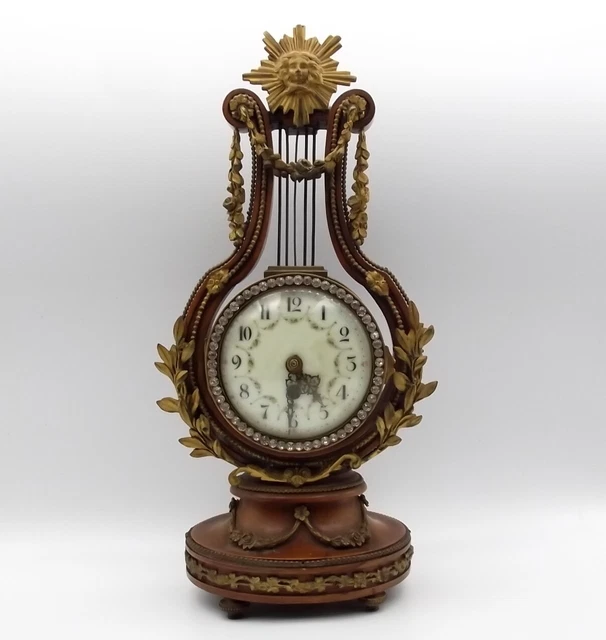
Antique Mantel Clock
The French mantelpiece was not complete without a clock flanked by candelabra: the garniture de cheminée. Paris makers sent their clocks all over the world in the 19th century.
1800–1930
Guide price (US$)
$100 – $500 – $5,000
low · typical · high, dealer level
Price tip: under $100 is a bargain worth checking twice; above $5,000, ask for provenance or a maker's mark.
Expert tip
Look at the back plate: a round 'Paris movement' stamped with medals and a maker's name is a good sign.
History
- Paris movements with medals, Japy Frères and Vincenti marks are typical of the 19th century.
Where it comes from
Paris for movements and cases; Franche-Comté for movement makers such as Japy Frères.
What sets the price
Bronze, maker, garniture.
Details to look at
- Round movements.
- Marble or gilt-bronze cases.
- Garnitures.
The market: most wanted
- Empire gilt-bronze figural clocks.
- Complete garnitures.
- Signed movements.
Authenticity: period piece or reproduction?
- Marks and medals.
- Case metal.
- Warning signs: replaced movements.
Where to buy
- French brocantes; Proantic.
- The guide range is $100–5,000.
Buyer's checklist
- Movement
- Case
- Pendulum
- Key
Facts
- Typical size
- H 30–60 cm
- Weight
- 3–20 kg
- Period
- 1800–1930
- Materials
- Gilt bronze, marble, spelter, brass
- US search interest
- 5,530 searches a month
Collector interest
US shoppers type 5,530 searches a month about mantel clock, spread over 102 keyword variants.
The styles people attach to it most are art deco (240), empire (70), farmhouse (50), rustic (50).
Material searches favour marble (300), porcelain (40), bronze (20), cast iron (20).