Vintage Picture Frames · research note
When a painting changes frame: style, fit and provenance
Antique frames can have histories that diverge from the pictures they surround. A later frame may deliberately imitate an earlier style, and an old frame may have been adapted for a different painting. Researching that relationship is a separate task from measuring whether the picture fits. Begin with the association, not the assumption that frame and painting have always belonged together.
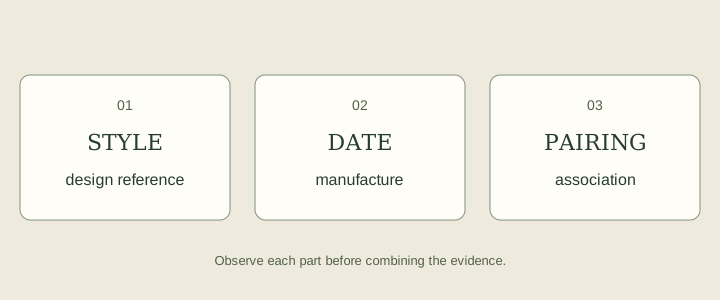
One display, two histories
Record the painting and frame independently before describing their relationship. Give each its own material description, measurements and proposed date. Then record the evidence that connects them: an old photograph, a documented commission, an inventory or a known reframing event. A convincing visual match is a design observation. It is not the same as a documented association.
A museum account of changing frames
In Framing Botticelli, V&A conservator Zoe Allen explains that changes in ownership and taste often led to changes of frame. The article also discusses the high quality of nineteenth-century frames made in Renaissance styles, which can complicate visual dating. This is a useful historical reason to separate the style being quoted from the date of manufacture.
The museum’s examples include ornament that relates to a painting’s subject, such as flowers associated with Evelyn de Morgan’s Flora. A thematic relationship can therefore be intentional. However, recognising related imagery in another pairing does not establish who designed the frame or when the association began.
Read the fit as evidence, not a verdict
Look for visible spacers, changes at the rebate and differences between the frame opening and the picture dimensions. Such features can suggest adaptation, but each needs interpretation. A professionally fitted insert may be a protective or practical choice rather than an attempt to disguise an unsuitable frame. Do not remove a painting from its frame merely to satisfy curiosity; existing records or a qualified examination may answer the question more safely.
Use photographs in chronological order
If old photographs exist, arrange them by their supported dates and compare the outer silhouette, corner ornament and visible inner edge. A photograph that clearly shows the same picture in a different frame establishes a change by that point in its history. It may not reveal exactly when the change occurred. Keep uncertain dates as ranges, and record whether a date belongs to the photograph, publication or event depicted.
A written description such as gilt frame can be too broad to identify the present frame. Compare distinctive details instead of treating every brief inventory entry as a match.
Describe an intentional modern pairing honestly
A collector can choose an antique frame for a later work, or a later frame for an older picture. The arrangement may be visually successful while remaining a new association. Record when and why the pairing was made and retain information about any previous frame. This preserves the decision as part of the object’s history instead of allowing a modern display choice to become an invented original relationship.
| Part or term | What to record | Why it matters |
|---|---|---|
| Style | What design vocabulary is used | May imitate an earlier period |
| Manufacture | When the frame was made | Needs its own evidence |
| Association | When frame and picture came together | Can be later than either object |
Check your understanding
What does a matching floral motif establish?
Questions about antique frames
Does matching ornament prove an original frame?
No. A thematic match can be deliberate without being original to the painting.
Can a later frame be historically interesting?
Yes. It may document collecting taste, display practice or revival design.
What does an old photograph establish?
It can document a particular arrangement by a supported date, if the details are identifiable.
Should the frame share the painting’s date in a catalogue?
Only if evidence supports that. Separate dates and uncertainties are more informative.
Related object guides
Sources and scope
Museum examples are comparisons, not authentication of objects offered elsewhere. The observation record and questions are editorial aids. Research checked 16 October 2026.