Vintage Picture Frames · research note
Vintage picture frames: rebate, ornament and fit
Vintage picture frames have several dimensions, and only one of them describes the space that holds a picture. The outside size, sight opening and rear rebate must be recorded separately. Construction and surface decoration also deserve their own descriptions. Understanding these distinctions makes it easier to choose a frame without trimming an artwork, forcing a panel or confusing a historical style with a manufacturing date.
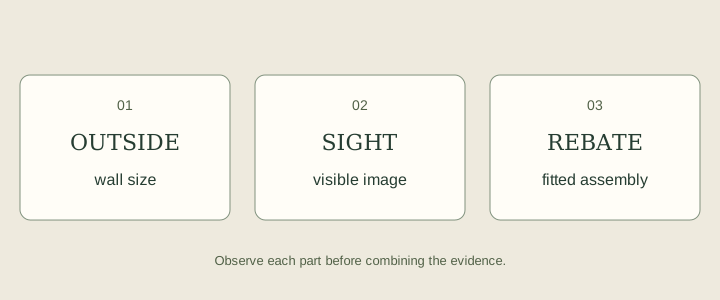
Three measurements answer three different questions
The outside dimensions describe how much wall space the frame occupies. The sight opening is the visible aperture at the front. The rebate is the recess behind that opening where the picture assembly sits. A photograph with an overall measurement cannot establish that a particular painting or mounted print will fit.
Measure width and height at the rear recess where accessible, and record its depth. A sheet with a mount, glazing and backing requires a different assembly from an unglazed canvas. Allow a framer to assess the necessary support and clearance. The aim is to adapt the framing solution to the artwork, not to alter the artwork until it matches an attractive surround.
A style label and a period attribution are different
The Getty's exhibition on French frames surveys carved and gilded examples across Louis XIII, Louis XIV, Régence, Louis XV and Louis XVI periods. These names organise historical designs, but they are also used to describe later work inspired by those designs. A label such as Louis XV style should not quietly become a claim that a frame was made during that reign.
Look at the ornament, corners and reverse as connected evidence. Describe visible wood, applied ornament and surface losses literally. A gold-coloured finish does not by itself identify the gilding technique. Where material is missing, photograph the existing exposed layers without scraping adjacent decoration to reveal more. Record repairs separately from the design vocabulary.
Assess the frame and its contents independently
An old frame can hold a recent print, and an older painting may have been reframed several times. Labels attached to the back may concern a dealer, exhibition, framer or previous owner. Transcribe them before deciding what they prove. A label on a backing board is not automatically a signature or provenance for the image.
Check the corners, loose ornament and the way the contents are secured. Avoid lifting by a projecting crest or pulling a fragile mitre to test it. If the frame contains an artwork, ask a framer or conservator to assess removal. The cost and scope of fitting can matter as much as the frame's purchase price, especially when historic decoration or unusual dimensions must be retained.
| Part or term | What to record | Why it matters |
|---|---|---|
| Outside size | Maximum overall width and height | Wall placement |
| Sight opening | Visible front aperture | How much of the image is shown |
| Rebate | Rear recess width, height and depth | Whether the assembly can be supported |
Check your understanding
Which measurement determines the space behind the opening?
Questions about vintage picture frames
What does rebate size mean?
It describes the recess behind the front opening where the framed assembly is located. It is different from the visible aperture and outside size. Record both dimensions and depth, then have the intended painting, print or glazing assembly assessed for a suitable fit.
Is a Louis-style frame necessarily antique?
A style term describes design associations and can apply to later work. A period attribution needs evidence about manufacture and history. Retain the word style when that is all the documentation supports; removing it can materially change the meaning of a description.
Can I cut a print to fit an old frame?
Consider a different frame or a suitable mount first. Trimming changes the sheet and may remove margins, inscriptions or other evidence. A framer can propose ways to accommodate the complete work rather than making an irreversible alteration to suit a decorative surround.
Does a label on the back authenticate the painting?
A label may identify a framer, dealer or event, but its relationship with the artwork must be established. Record its wording and exact location. Keep the history of the frame, backing and image separate until evidence shows how they belong together.
Related object guides
Sources and scope
Museum examples are comparisons, not authentication of objects offered elsewhere. The observation record and questions are editorial aids. Research checked 16 October 2026.