Vintage Side Tables · research note
Vintage side tables: proportion, tops and construction
A vintage side table should be understood through its supporting structure and intended position. Overall height, usable surface and projecting feet can matter more than an attractive photograph. The top, base, drawer and fittings also need separate descriptions. This guide offers a practical way to compare small occasional tables while keeping visible style, materials and any claimed date distinct.
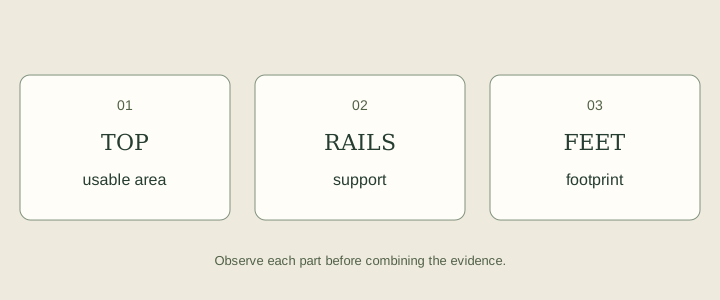
Begin with the role the table must fulfil
A table beside an armchair has different constraints from one beside a bed or in a narrow passage. Measure the available floor area and the height of the adjacent furniture. Then compare the table's overall dimensions, including handles and splayed feet. A circular top does not make a footprint circular if the base projects beyond it.
The name side table is a broad description of use. Labels such as occasional table or bedside table may overlap in sale listings. A console, by contrast, is often discussed in relation to a wall. The Met's catalogue of a French Languedoc-marble console, probably late seventeenth century, offers a documented example of that separate furniture form. It should not be used as a date model for any small marble-topped table.
Distinguish the top from what supports it
Look beneath the top where access is already available. Record whether it rests on a frame, is fixed to an apron or appears removable. A marble slab and a wooden support may have separate histories. Ask the seller whether the components were acquired together and whether the top has been repaired. Do not lift a table by a loose slab or a projecting decorative edge.
For a timber top, describe visible construction rather than guessing a species from colour. A veneer is a surface layer over a support; its presence is not synonymous with poor workmanship. Look for lifting edges and missing sections without pressing them back into position. Surface finish, structural soundness and attribution are three different questions.
Read the legs, rails and drawers
A useful underside photograph shows where legs join the supporting rails, not only the centre of the top. Look for visible movement, gaps, added blocks and differences between fittings. These observations can guide questions about repair, but a single screw type should not date an entire table. For a drawer, obtain images of its sides, base and runners if it opens freely.
The Canadian Conservation Institute recommends checking wooden furniture for loose joints before moving it and supporting it appropriately. Apply that principle before any trial placement. Ask for the condition of the structural frame in writing, and keep restoration notes with the measurements. A table that looks level in a photograph still needs an assessment on a suitable level surface.
| Part or term | What to record | Why it matters |
|---|---|---|
| Overall size | Height, width, depth and projections | Fit beside furniture and through access routes |
| Top | Material, support and repairs | Whether separate handling is needed |
| Base | Joints, rails and foot positions | Structural questions before use |
Check your understanding
Which width matters when a table has splayed feet?
Questions about vintage side table
Is veneer a sign that a table is modern?
No date follows from the word veneer alone. Record the surface layer and supporting construction, then compare those observations with a documented design or maker. A material description should not be substituted for the research needed to attribute a particular object.
Can I lift a table by its marble top?
First establish whether the top is fixed and how the assembly is intended to be handled. A removable slab does not carry the base with it safely. Ask for handling arrangements and appropriate help rather than testing the attachment by lifting.
What makes a side table suitable beside a chair?
Compare height, reach, surface area and available floor space with the actual chair. Allow for projecting feet and movement around it. There is no single ideal dimension for every room; a measured comparison is more informative than a style label.
Does a new drawer handle invalidate an older table?
A later handle is an alteration that should be documented. It does not alone establish the age of the carcass or top. Examine the surrounding fixing holes and ask what was changed, keeping the history of the fitting separate from that of the structure.
Related object guides
Sources and scope
Museum examples are comparisons, not authentication of objects offered elsewhere. The observation record and questions are editorial aids. Research checked 16 October 2026.