Antique & Vintage Furniture · collecting guide
Vintage Side Tables
A side table is a small supporting surface intended for use beside a seat, bed or wall. Vintage examples vary in their tops, supports, storage and construction. The useful comparison is between structure and function, not simply between decorative styles.
What to examine first
- Measure height, width and depth, including projecting handles or feet.
- Inspect the apron, leg joints and underside before moving the table.
- Check whether a stone or glass top is removable and how it is supported.
Names you may encounter
occasional table, end table, bedside table, gueridon.
These terms help describe an object. They are starting points for research, not a certificate of age, origin or authenticity.
Related subjects
Research notes in this guide
- Guéridons as candlestands: a furniture name with changing uses
The word guéridon can lead a reader towards a small table, yet historical examples also served as tall supports for lighting.
- Small French tables: linked mechanisms and hand-operated slides
A small French table can transform its working surface without changing its decorative character.
- The portable bedside table and its ventilated cupboard
A small table can reveal a room’s daily routine. Handles, shelves and openings may explain its purpose more clearly than its decorative surface.
- Donald Deskey nesting tables: graduated dimensions and modern materials
Nesting tables organise several usable surfaces within one footprint. Donald Deskey’s set provides a measured example of this compact furniture idea.
- A Spanish walnut table in a French country room: origin and placement
A table can work beside a chair without having been made as a named side-table type.
- Porcelain plaques on a bonheur-du-jour: a small desk with several crafts
The bonheur-du-jour is a small writing desk whose decoration can combine cabinetmaking, metalwork and porcelain.
- Green paint, gilding and marble on a French side table
A side table may combine several contrasting surfaces rather than present one uniform wood finish.
- Travelling tables: folded furniture and its working footprint
A travelling table can occupy very different amounts of space when stored and when opened.
- Sewing and writing tables: the small table as a specialist workstation
A vintage side table may be catalogued by the work it supported rather than its present position beside a chair.
- Beyond the side table: a French table that changes working height
A French side table may look like a simple support until its movable elements are understood.
- Tilt-top parlor tables: movement, catches and display positions
An antique parlor table with a tilting top combines a working surface with a movable assembly.
- Vintage side tables: proportion, tops and construction
A vintage side table should be understood through its supporting structure and intended position.
Encyclopedia entries: identification & prices
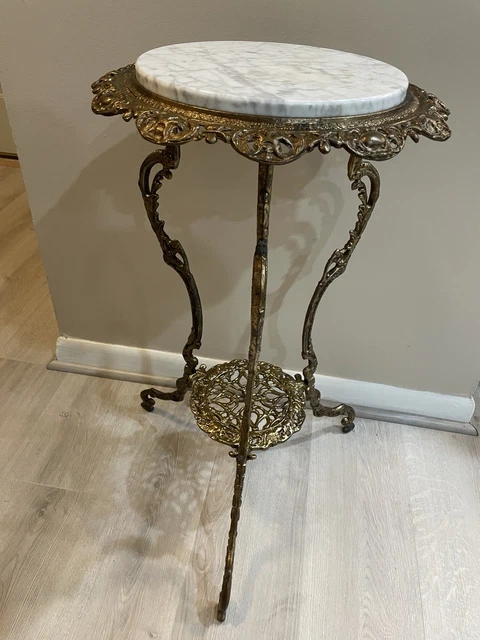
Antique Side Table
1750–1930 · $150–$2,500
Vintage End Table
1770–1960 · around $869
Vintage Accent Table
1760–1970 · asks around $695
Antique Pedestal Table
1820–1940 · asks around $746
Antique Nesting Table
1790–1970 · around $1,045
Antique Drink Table
1780–1980 · asks around $48
All entries in Tables & Consoles.