Vintage Side Tables · research note
Tilt-top parlor tables: movement, catches and display positions
An antique parlor table with a tilting top combines a working surface with a movable assembly. Its upright position can make the top resemble a display panel, while its horizontal position reveals a different footprint. Understanding those two arrangements is more useful than identifying the table solely by the decoration on its top.
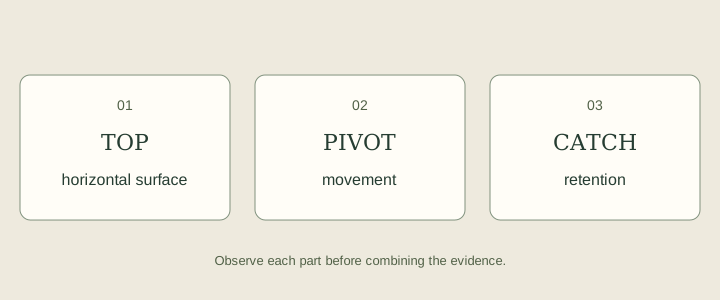
Two positions, one object
A tilt-top table permits the top to move from its usual horizontal position towards an upright one. The precise mechanism varies. Record the top, the point about which it moves, the supporting structure and any retaining catch as separate components. A hinged or pivoting top is a construction feature, not a date or a national attribution. Not every small round table is designed to tilt.
A German example in a French furniture conversation
The Met catalogues a tilt-top table from the workshop of David Roentgen, made at Neuwied am Rhein around 1785–90, in mahogany with gilt bronze and brass. This documented German example is useful because it shows that the form cannot be assumed to be French. Its record identifies workshop, place, period and materials separately. Those are the same questions to ask of a table encountered in a French market, even when no maker can yet be established.
Record the mechanism without forcing it
Ask for photographs of the underside and the area connecting top and support. Identify the parts that appear to retain the top in its working position. If a catch is absent, damaged or unfamiliar, do not test the table by loading it. Likewise, a mechanism that resists movement should not be forced for a photograph. A furniture specialist can assess how it operates and whether the surviving fittings belong together.
Write down what is visible and what remains inaccessible. A screw or hinge may be a later repair, but that does not date the entire table. The question is whether the present assembly explains the intended movement and whether alterations have changed it.
Measure each position separately
Record the height and footprint with the top horizontal, then the complete outline in the upright position if it can be moved safely. Include projecting feet and the space needed for the top to travel between positions. A table that occupies little floor space when upright may still require clearance around the support. These measurements are a planning record, not a structural assessment.
For a room layout, draw both outlines on paper before deciding where the table should stand. Consider nearby drawers, doors and walking routes. A photograph of the top alone cannot answer these practical questions.
Treat a decorated top as part of the mechanism
The surface may carry veneer, inlay, paint or another decorative treatment, each with its own condition. Movement changes how the top is handled and supported. Record any cracks, lifting areas or previous repairs before proposing frequent changes of position. If the object is chosen mainly for display, describe that current use separately from its historical function as a table. A decorative upright presentation does not make missing working components irrelevant.
| Part or term | What to record | Why it matters |
|---|---|---|
| Horizontal position | Height and usable surface | Needs secure support |
| Upright position | Complete outline and projection | Not the same footprint |
| Moving assembly | Pivot and retaining parts | Requires individual assessment |
Check your understanding
What does a tilt-top mechanism identify?
Questions about antique parlor table
Does tilt-top mean French?
No. The form occurs in different production contexts, including the documented German Roentgen example.
Can a loose catch be ignored for display?
Its condition should still be recorded and assessed. Display does not automatically remove the need for secure support.
Should I lift the table by its top?
Do not assume a movable top is a safe lifting point. Seek handling advice for the particular construction.
Why measure both positions?
The dimensions and clearance requirements change when the top moves, affecting placement and access.
Related object guides
Sources and scope
- The Metropolitan Museum of Art: Workshop of David Roentgen, Tilt-top table, ca. 1785–90
- Canadian Conservation Institute: care of wooden objects
Museum examples are comparisons, not authentication of objects offered elsewhere. The observation record and questions are editorial aids. Research checked 16 October 2026.