Kitchen Utensils, Molds & Grinders · identification & value
Vintage Colander
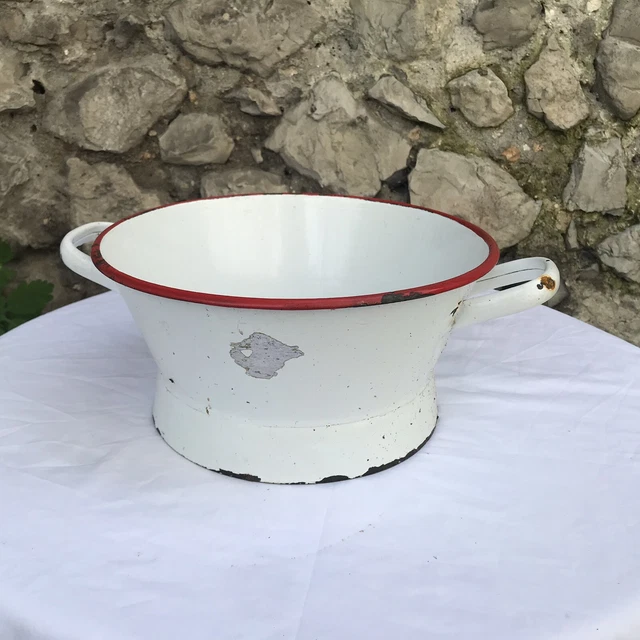
In a French farmhouse kitchen, the passoire hung on a nail near the sink: a copper bowl with a ring foot and two handles for draining vegetables, or a white enamelled colander with a blue rim. The copper ones came from Villedieu-les-Poêles in Normandy, where coppersmiths had hammered pans for centuries.
1850–1960
Typical asking price on live listings
about $65
Median of current eBay asking prices (via PicClick); listings run from $2.5 to $3,000. Asking prices are not sold prices.
Expert tip
Look at the holes: in older colanders they were hand-punched, often in decorative rosettes or stars, and leave a raised burr on the inside; machine-punched rows of identical round holes in a perfectly smooth body mean later production.
History
- Copper kitchenware has been made in Villedieu-les-Poêles since the Middle Ages.
- Japy Frères of Beaucourt and other eastern French factories produced enamelled steel kitchenware from the late 19th century to the mid-20th century.
- Tin and enamel colanders were standard in French, English and American kitchens through the 20th century.
Where it comes from
Villedieu-les-Poêles in Normandy for hand-made copper kitchenware; Beaucourt (Japy Frères) and other eastern French factories for enamelled steel (émail) colanders; tinned-steel colanders from French, English and American makers; stoneware and earthenware strainers from country potteries.
Details to look at
- Holes: punched rosettes, stars or concentric circles on 19th-century pieces, with burrs on the inside; even rows on later factory colanders.
- Material: copper 1.5–2 mm thick and tinned inside; enamelled steel in white, blue, grey speckle (granité) or with a contrasting rim; plain tinned steel.
- Foot and handles: a riveted foot ring and cast iron or brass handles on copper; rolled rims and riveted or welded loop handles on enamel and tin.
The market: most wanted
- Large 19th-century copper colanders with decorative hole patterns, iron handles and a stamped coppersmith's mark.
- Japy enamel colanders in blue, white or speckled enamel with the maker's mark under the base.
- Glazed stoneware and earthenware strainers from French country potteries, which survive less often than metal ones.
Authenticity: period piece or reproduction?
- Hand-made copper shows faint hammer marks, dovetailed (toothed) seams when the bowl is in sections and handles fixed by large rivets; check the tin lining for bare copper and plan to retin if you will cook with it.
- Old enamel has several coats over a heavy steel body; chips show black or blue ground coat and rust at the edges.
- Maker stamps help: 'Japy' or a Japy trademark under enamel pieces, and coppersmiths' names or Villedieu stamps on copper.
- Warning signs: thin copper-plated steel that a magnet grabs, 'vintage-style' new enamelware in fashionable colours, and handles held with modern screws.
Where to buy
- In France: brocantes, vide-greniers and Leboncoin for enamel and copper colanders; Villedieu-les-Poêles shops and fairs for copper, including retinning services.
- In the US and UK: Etsy and eBay for French enamelware and copper; antique kitchenware dealers and flea markets for tin and enamel colanders.
Buyer's checklist
- Hole pattern
- Enamel chips
- Tinning
- Handles
Facts
- Typical size
- Ø 20–35 cm · H 10–18 cm
- Weight
- 0.3–2 kg
- Period
- 1850–1960
- Materials
- Copper, tin, enamelled steel, stoneware, iron
- US search interest
- 320 searches a month
Collector interest
Colander draws 320 monthly US searches, split into 2 keyword variants.
Related in Kitchen Utensils, Molds & Grinders
- Antique Coffee Grinder
- Antique Butter Churn
- Toleware
- Vintage Enamelware
- Antique Rolling Pin
- Vintage Tins
- Antique Mortar & Pestle
- Antique Copper Molds
Go deeper: research notes
The Antique Copper Moulds: An Identification Guide gathers 11 sourced object studies, including:
- Kitchen inventories and mould collections: reading the scale of baking equipment
- Recording small solder repairs on a copper mould
- A tinned copper timbale mould from Dynevor Castle
See also: Antique Butter Moulds, Antique Bread Boards.