Kitchen Utensils, Molds & Grinders · identification & value
Antique Copper Molds
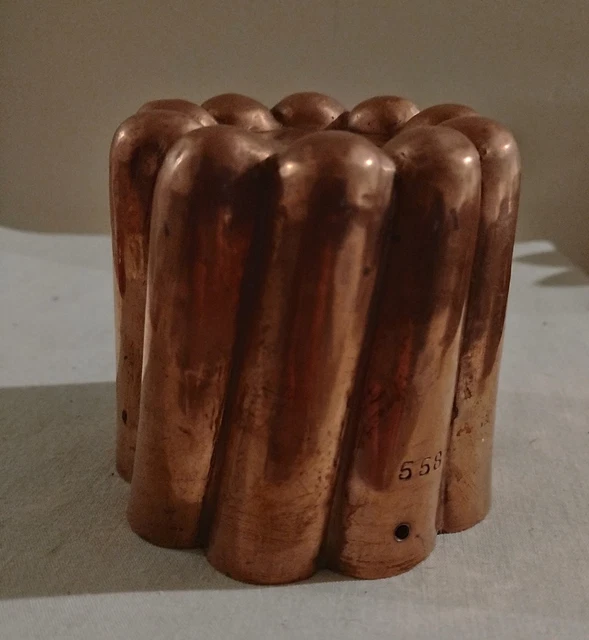
In the great kitchens of 19th-century Paris and London, cooks turned out jellies, mousses, aspics and puddings from tall copper moulds shaped like castles, domes and rings, with the shape sometimes stamped with a number to match a kitchen inventory. On a farm in Alsace, the Sunday kouglof rose in a glazed earthenware mould from Soufflenheim.
1820–1950
Verified market data (US$)
$55 – $154 – $825
lowest · median · highest observed
French dealers asking on Proantic: €50–750 (median €140, 13 listings). (Proantic prices converted to USD at 1 EUR = $1.10.)
Expert tip
Look inside a copper mould for the lining: old moulds were tinned to keep food from touching copper; a worn, grey and patchy tin lining is normal on an antique, but bare copper means it is decorative unless re-tinned. Check the rim for a stamped number or maker's mark.
History
- Tinned copper moulds were widely used in professional and grand domestic kitchens through the 19th century; English makers often stamped inventory numbers.
- Soufflenheim earthenware kouglof moulds have been made in Alsace for centuries, and tin chocolate moulds were made in Paris in large numbers in the late 19th and early 20th centuries.
Where it comes from
Villedieu-les-Poêles (Manche) and Paris kitchen suppliers such as E. Dehillerin for copper moulds; Alsace (Soufflenheim) for earthenware kouglof moulds; Paris tinsmiths such as Létang for chocolate and ice-cream moulds; England (Benham & Froud and others) for many numbered copper pudding moulds. Wooden brick moulds are mostly American and English.
Details to look at
- The form: tall castle and turret jelly moulds, fluted domes, ring (savarin) and charlotte moulds, fish, animal and fruit shapes, or hinged two-part chocolate moulds.
- The lining and metal: heavy-gauge copper with tin inside, tinned steel for chocolate moulds, glazed earthenware for kouglof.
- The marks on the rim or base: inventory numbers, crests, maker's names and the word for France or Paris.
The market: most wanted
- Large, sculptural 19th-century copper jelly and pudding moulds, especially numbered English examples and French moulds from Paris suppliers.
- Paris chocolate moulds stamped by makers such as Létang, in animal and Easter shapes.
- Old Soufflenheim kouglof moulds with slip decoration, and early American wooden brick moulds with their maker's names.
Authenticity: period piece or reproduction?
- Old copper moulds are made from several pieces joined with dovetailed or brazed seams; modern ones are spun or pressed in one piece.
- Heavy copper (2 mm or more) feels substantial; thin decorative copper dents with a fingertip.
- Struck stamps have sharp, slightly sunken letters; engraved or etched marks are later.
- Warning signs: thin pressed copper sold as antique, lacquered surfaces that hide new metal, and numbers stamped on reproductions to fake an inventory.
Where to buy
- In France: Puces de Saint-Ouen and Vanves for copper and chocolate moulds, Alsace brocantes for kouglof moulds, Leboncoin and Drouot kitchenware lots; Villedieu-les-Poêles shops sell new copper.
- In the US and UK: eBay and Etsy for moulds of all kinds, 1stDibs for rare copper, and English antique fairs and kitchenware specialists for numbered pudding moulds.
Buyer's checklist
- Lining
- Dents
- Marks
- Seams intact
Facts
- Typical size
- H 8–20 cm · Ø 10–25 cm
- Weight
- 200 g–2 kg
- Period
- 1820–1950
- Materials
- Tinned copper, tin, earthenware, wood, pewter
- US search interest
- 640 searches a month
Collector interest
US shoppers type 640 searches a month about mold, spread over 13 keyword variants.
Material searches favour copper (210).
Related in Kitchen Utensils, Molds & Grinders
- Antique Coffee Grinder
- Antique Butter Churn
- Toleware
- Vintage Enamelware
- Antique Rolling Pin
- Vintage Tins
- Antique Mortar & Pestle
- Vintage Meat Grinder
Go deeper: research notes
The Antique Butter Moulds: An Identification Guide gathers 11 sourced object studies, including:
- Butter, cheese and pastry moulds: comparing functions without merging them
- Butter hands: working paddles that are not an original pair
- Butter rollers that repeat lettering and rectangular patterns
See also: Antique Copper Moulds, Antique Bread Boards.