Tableware & Kitchen Antiques · collecting guide
Antique Bread Boards
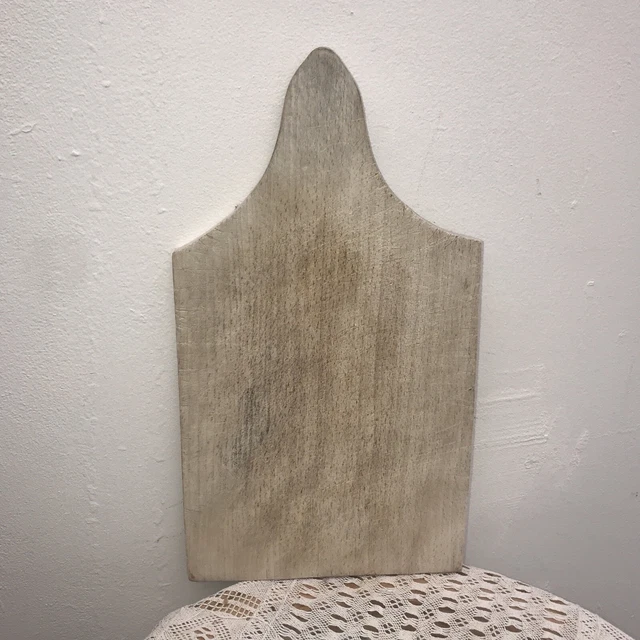
Antique bread boards include cutting surfaces, serving boards and larger work boards. The form, grain, handle and wear pattern should be recorded together. A decorative patina does not establish either a precise age or present suitability for preparing food.
What to examine first
- Measure the usable surface separately from the handle.
- Check end grain, splits, warping and evidence of glued repairs.
- Ask about applied oils, stains, coatings and previous restoration.
Names you may encounter
bread board, cutting board, dough board, wooden kitchen board.
These terms help describe an object. They are starting points for research, not a certificate of age, origin or authenticity.
Related subjects
Research notes in this guide
- Pokerwork breadboards: burnt-line decoration and a removable cutting disc
A decorated breadboard can combine an ornamental surround with a separate working surface.
- The Summerly bread platter and art for manufacture
An ornamented bread platter can belong to a wider attempt to connect artists with manufacturers. Its design history need not begin with a private household commission.
- Raised-sided bread boards for mixing dough
Bread boards were not all flat circular serving pieces. Raised sides can identify a different working arrangement within a baking collection.
- William Gibbs Rogers and the carved bread platter as a commissioned object
Some nineteenth-century bread platters belong to the history of professional carving and patronage rather than anonymous farmhouse production.
- Bread boards and dough troughs: a flat surface and a containing vessel
Bread-making equipment should not be reduced to a single decorative category.
- Breadboards with knife storage: an integrated household design
Some bread-service objects were designed to keep the cutting tool with the board.
- Bread knives beside old boards: recording an assembled display
An old bread board and a bread knife make a convincing display, but visual compatibility does not prove that they have always belonged together.
- Trenchers and bread boards: two wooden objects with different roles
A wooden surface associated with food is not necessarily a bread-cutting board.
- Our Daily Bread: inscriptions and family craft on a carved board
Inscriptions on antique bread boards can carry a message without naming a maker. The wording, the carved motif and any mark on the reverse deserve separate attention.
- Bread board or oven peel? Reading the handle, head and working reach
Among antique bread boards, a long wooden paddle deserves a closer look before it is labelled a serving board.
- Antique bread boards: carving, wear and working surfaces
An antique bread board combines a food-related function with a surface that may carry carving, lettering and wear.
Encyclopedia entries: identification & prices
All entries in Kitchen Utensils, Molds & Grinders.