Coffee & Tea · identification & value
Antique Tea Caddy
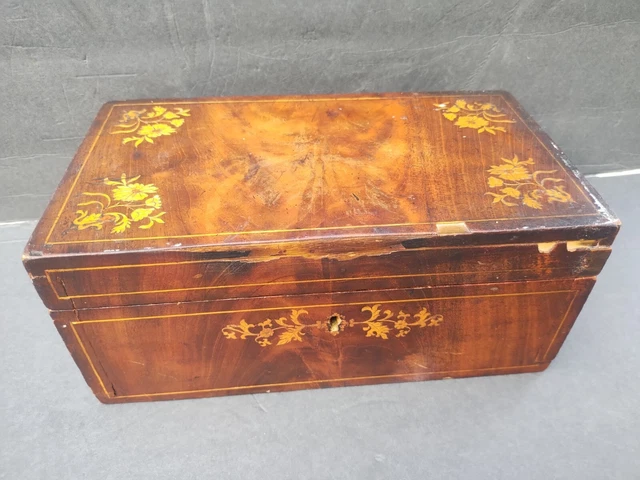
In 18th-century England, tea was so expensive that it was kept under lock and key, and the mistress of the house mixed the blends herself at the table. The tea caddy, a small box of mahogany, satinwood or tortoiseshell, held the precious leaves, with a cut-glass bowl in the middle for mixing.
1750–1900
Guide price (US$)
$80 – $300 – $2,000
low · typical · high, dealer level
Price tip: under $80 is a bargain worth checking twice; above $2,000, ask for provenance or a maker's mark.
Verified market data (US$)
$198 – $501 – $7,480
lowest · median · highest observed
French dealers asking on Proantic: €180–6 800 (median €455, 60 listings). (Proantic prices converted to USD at 1 EUR = $1.10.)
Expert tip
Open the caddy and look at the compartments: an original Georgian caddy often has lead or tin-foil lining, matching lids for two teas (green and black) and a lock with a working key; a missing lining or lock lowers the value sharply.
History
- Tea caddies were essential in English households from the mid-18th to the mid-19th century, when tea prices fell.
- Fruit-shaped caddies in pear and apple wood were made in the late 18th century and are highly prized.
Where it comes from
Mostly English: Georgian tea caddies were made by London cabinetmakers and provincial workshops; French boîtes à thé are rarer, in silver, lacquer or painted tin, and the Paris tea house Mariage Frères (founded 1854) has its own collectible tins.
What sets the price
Wood, inlay, interior.
Details to look at
- Material: mahogany, satinwood, rosewood, tortoiseshell, silver.
- Interior: lining, compartments, mixing bowl.
- Lock and key, handle and feet.
The market: most wanted
- Georgian fruit-shaped caddies.
- Tortoiseshell and ivory caddies (subject to trade rules).
- Fine marquetry and silver-mounted caddies.
Authenticity: period piece or reproduction?
- Old lining is lead or tin foil, soft and darkened.
- Wood shows age shrinkage and patina; locks are hand-made.
- Fruit-shaped caddies have stalks that are original and carved from one piece.
- Warning signs: new linings, reproduction fruit caddies with artificial ageing, and tortoiseshell or ivory without legal paperwork.
Where to buy
- In France, Drouot sales, Proantic and Saint-Ouen.
- In the US and UK, specialist dealers, auction houses, 1stDibs and eBay. The guide range is $80–2,000.
Buyer's checklist
- Lining original
- Lock and key
- Compartments complete
- Wood condition
Facts
- Typical size
- L 12–30 cm · H 10–20 cm
- Weight
- 0.5–2 kg
- Period
- 1750–1900
- Materials
- Mahogany, satinwood, rosewood, fruitwood, tortoiseshell, silver, tin
- US search interest
- 1,550 searches a month
Collector interest
US shoppers type 1,550 searches a month about tea caddy, spread over 12 keyword variants.
Material searches favour silver (30), brass (20), wooden (10).