Garden Iron & Metal · identification & value
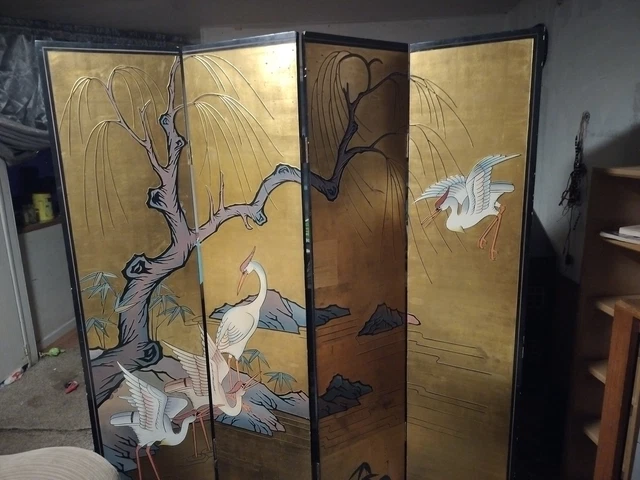
Vintage Room Divider
At the 1925 Paris Exposition des Arts Décoratifs, wrought iron was a star: Edgar Brandt showed screens and gates of stylised fountains and spirals. The fashion spread into apartments, where iron screens separated a dining corner from the salon without blocking the light.
1920–1970
Typical asking price on live listings
about $250
Median of current eBay asking prices (via PicClick); listings run from $2.5 to $16,800. Asking prices are not sold prices.
Expert tip
Look at the joints: hand-forged ironwork is assembled with collars (colliers), rivets and tenons; welding blobs at every joint indicate later fabrication, even if the design looks Deco.
History
- Edgar Brandt (1880–1960) led French Art Deco ironwork; Raymond Subes and Gilbert Poillerat continued the tradition into the 1930s–40s.
- Iron folding screens and fixed dividers were popular again in 1950s–60s interiors in France and Italy.
Where it comes from
Paris art ironwork (ferronnerie d'art) of the 1920s–40s: Edgar Brandt, Raymond Subes and Gilbert Poillerat; 1950s–60s French and Italian decorative iron screens; Spain and Mexico for many later wrought iron dividers.
Details to look at
- Forged scrolls, leaves and stylised motifs.
- Assembly: collars, rivets, tenons or welds.
- Panels and hinges on folding screens.
The market: most wanted
- Signed Edgar Brandt screens and grilles.
- Raymond Subes and Gilbert Poillerat pieces with documented provenance.
- Quality 1950s French iron screens with gilded details.
Authenticity: period piece or reproduction?
- Hand-forged iron shows hammer marks and varied thickness of bars.
- Old paint layers or wax patina, with rust in crevices only.
- Signatures stamped on the iron (e.g. 'E. Brandt').
- Warning signs: hollow square tube, uniform modern welds, powder-coat paint and unsigned 'Brandt style' at Brandt prices.
Where to buy
- Saint-Ouen (Paul Bert-Serpette) and Drouot design sales for French Deco ironwork; Leboncoin for 1950s screens.
- In the US, 1stDibs, Chairish and Round Top for wrought iron room dividers; check the weight and request detailed joint photos.
Buyer's checklist
- Joint method
- Signature
- Stability of hinges
- Rust and paint
Facts
- Typical size
- H 150–200 cm · W 100–240 cm (folding)
- Weight
- 20–80 kg
- Period
- 1920–1970
- Materials
- Wrought iron, steel, sometimes brass or gilding
- US search interest
- 150 searches a month
Collector interest
Room divider draws 150 monthly US searches, split into 3 keyword variants.
The materials buyers name are wrought iron (150).