Shabby Chic · research note
Shabby chic decor: reading painted furniture before changing it
A pale painted chair may look perfectly suited to shabby chic decor, yet its surface can conceal several different histories. Original paint, later repainting, deliberate distressing and accidental loss are not interchangeable. Before changing the finish, record what is visible and decide what information is still missing.
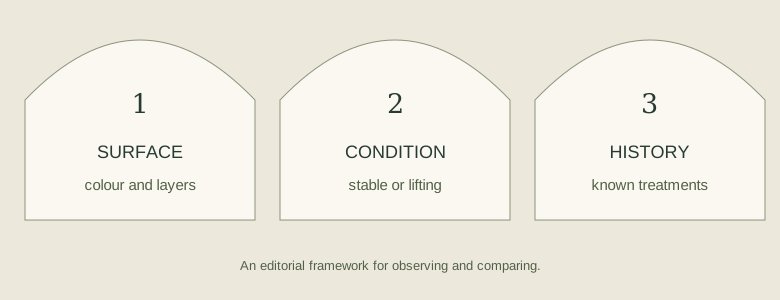
Describe colour without dating it
Photograph the whole object in even light, then record the main colour, gloss and texture. Note whether the underside and concealed areas appear different. A colour name such as chalk white describes appearance; it does not identify a particular product, binder or date. Avoid assuming that a matte finish was always intended to be matte, since wear and accumulated material can change the surface that you see.
Map where the wear occurs
Draw a simple outline and mark rubbed edges, scratches, losses and exposed lower layers. Compare contact areas with places that would rarely be touched. That comparison can raise useful questions, but a plausible wear pattern is not proof of age. Deliberately distressed furniture can imitate use, and genuine old furniture can have been refinished. Record the pattern as an observation before proposing an explanation.
Separate a stable surface from active loss
A finish with old, settled losses differs from one that is lifting or shedding material. Do not pick at an edge to discover what lies beneath it. If the surface is unstable, treatment should be discussed with a qualified conservator before cleaning or handling repeatedly. The decorating preference for a worn appearance does not make deterioration desirable. Keeping an object usable may require a different decision from preserving it solely for study or display.
Ask questions that produce useful answers
Request the known history of painting and refinishing, photographs from before treatment if available, and a clear description of repairs. Ask whether an attribution refers to the frame, the finish or both. A seller may know that a chair was repainted recently but be uncertain about its manufacture. That partial answer is still useful when stated accurately. Keep it alongside photographs rather than replacing it with a broad phrase such as original patina.
Arrange the room before altering the furniture
Try a removable textile, a different wall background or a nearby floral picture. Compare these changes with the chair’s existing surface. A darker frame can still belong in a comfortable, softly furnished room. If the colour seems too dominant, moving the piece may solve the composition without changing its material history. Any proposed repainting should be a separate, considered project with the implications understood.
Use the style name responsibly
Rachel Ashwell’s published account describes a practical vision of comfortable living and imperfect objects. That design history supports a discussion of the aesthetic, not an attribution of an unmarked chair to her company. In a collection note, record shabby-chic arrangement as the current setting, while retaining the object’s own maker, date and treatment information where known. The room’s story should not replace the object’s story.
| Focus | What to examine | Useful distinction |
|---|---|---|
| Colour and gloss | Describe the visible surface | No automatic date |
| Wear and losses | Map their locations | Pattern is a question, not proof |
| Treatment history | Ask what was changed | Keep frame and finish separate |
Check the distinction
Which statement is the most precise?
Questions about Shabby Chic
Is distressed paint always old?
No. Distressing can be deliberate and recent. Appearance alone cannot establish when the finish was applied.
Should I sand an old chair for the look?
Do not make sanding the starting point. Record the object and seek suitable assessment of an unfamiliar finish before an irreversible change.
Must shabby chic furniture be white?
No. The term describes a broader decorative approach. The room can include contrasting colours, wood and metal.
Does shabby chic mean Rachel Ashwell furniture?
Not automatically. A broad style description is different from a supported maker or brand attribution.
Return to the style guide
Shabby chic decor: comfort, surfaces and honest descriptions
Look closer at the objects
Compare decorating styles
Sources and scope
Sources checked 16 October 2026. Historical references support the named examples; the room layouts and observation exercises are our editorial proposals. A style comparison does not authenticate an individual object.