Machines & Office · identification & value
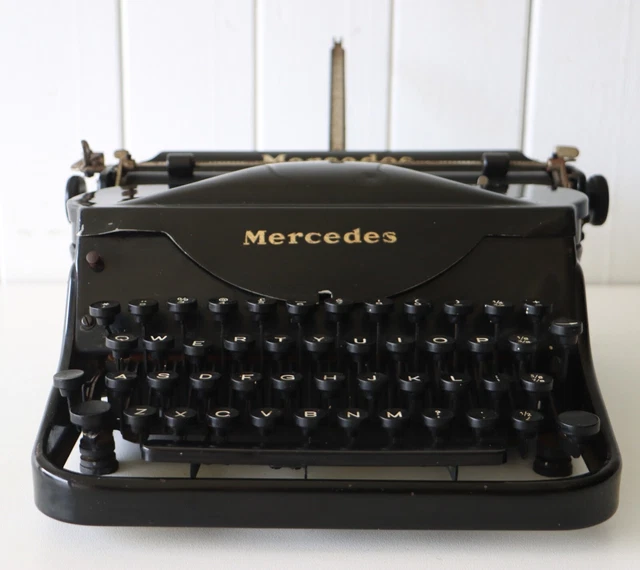
Antique Typewriter
In 1900, a new office typewriter arrived from the Underwood company with a feature that typists had been waiting for: the letters struck the front of the platen, so the text was visible as it was typed. The design, credited to the German-American engineer Franz Wagner, swept through offices and newsrooms, and the black Underwood No. 5 became the archetype of the typewriter.
1900–1960
Guide price (US$)
$50 – $200 – $1,000
low · typical · high, dealer level
Price tip: under $50 is a bargain worth checking twice; above $1,000, ask for provenance or a maker's mark.
Expert tip
Find the serial number stamped on the frame and date the machine from a published Underwood serial list before agreeing a price; a low-serial No. 5 is worth more than the countless later ones.
History
- Underwood introduced the No. 5 in 1900; it stayed in production for decades and millions were made, which is why it is common today.
- Underwood also made portable typewriters from the 1920s; Japy Frères of Beaucourt produced typewriters in France in the 20th century.
Where it comes from
Not French: the Underwood was American, built in New York and then Hartford, Connecticut. France had its own maker in Japy Frères of Beaucourt (Territoire de Belfort), and French buyers also collect the AZERTY-keyboard versions of American machines.
What sets the price
Model, working.
Details to look at
- The serial number and model (No. 5, No. 3 wide-carriage, Champion, portables).
- Glass-topped keys with metal rims and the gold decals on the frame.
- Carriage, ribbon spools and bell: everything that moves must move.
The market: most wanted
- Early, low-serial Underwood No. 5 standards in good working order.
- Underwood portables with their original case.
- Japy machines and other French typewriters with AZERTY keyboard.
Authenticity: period piece or reproduction?
- Check that each key strikes and returns and the carriage advances at each key press.
- Original decals show slight wear and crazing, not fresh bright gold.
- Glass key tops with yellowed legends are normal; replacement plastic keys reduce value.
- Warning signs: black spray paint over rust, replaced key tops, missing feet and 'working' machines that skip or jam.
Where to buy
- In France: Leboncoin, regional brocantes and Selency for Japy and imported machines, plus specialist repairers.
- In the US and UK: eBay, Etsy and typewriter repair shops that sell serviced machines. The guide range is $50–1000, with typical examples around $200.
Buyer's checklist
- Serial number
- All keys strike
- Carriage advances
- Decals and paint
Facts
- Typical size
- H 25–30 cm · W 40–50 cm · D 35–40 cm
- Weight
- 13–16 kg
- Period
- 1900–1960
- Materials
- Cast iron frame, steel, glass key tops, rubber platen
- US search interest
- 690 searches a month
Collector interest
Search demand for typewriter reaches 690 US searches a month across 3 distinct queries.