Serving Pieces · identification & value
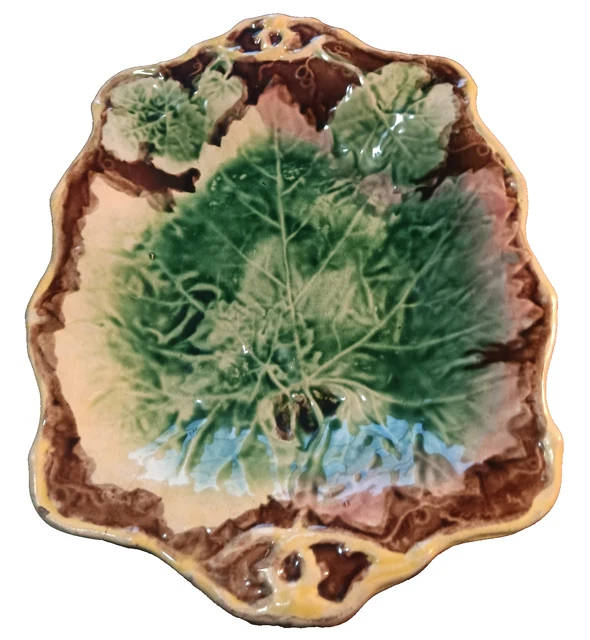
Vintage Platter
On a French Sunday table, the roast or the fish arrived on a long platter, set in the middle for everyone to serve themselves. In 19th-century England and America, a giant transfer-printed platter held the holiday turkey, and families kept their best one for that day alone. Today these platters hang on walls as much as they serve.
1780–1950
Guide price (US$)
$40 – $150 – $800
low · typical · high, dealer level
Price tip: under $40 is a bargain worth checking twice; above $800, ask for provenance or a maker's mark.
Verified market data (US$)
$88 – $539 – $6,160
lowest · median · highest observed
French dealers asking on Proantic: €80–5 600 (median €490, 60 listings). (Proantic prices converted to USD at 1 EUR = $1.10.)
Expert tip
Turn the platter over and check the foot rim and well: original faience shows the maker's mark and a smooth foot with even wear, while hairline cracks show as fine dark lines in raking light; tap it lightly, and a clear ring means it is sound.
History
- Faience and porcelain platters were standard tableware from the 18th century.
- Mason's patented ironstone in 1813; Staffordshire transferware platters were made and exported in large numbers from the early 19th century.
Where it comes from
French faience platters came from Gien, Quimper, Longwy, Sarreguemines and Creil-Montereau; silver and silverplate platters from Paris makers; the ironstone and transferware turkey platters sought in the US are mostly English, from Staffordshire potteries such as Mason's.
What sets the price
Size, maker.
Details to look at
- Shape: oval, round, fish platter with well.
- Decoration: transfer, hand-painted, gilding.
- Maker's marks on the back.
The market: most wanted
- Large Staffordshire transferware turkey platters with rare patterns.
- Hand-painted Quimper and Gien platters.
- Silver platters by known Paris makers.
Authenticity: period piece or reproduction?
- Old faience shows crazing and glaze wear on the foot rim.
- Transfer-printed patterns have small misalignments at joins.
- Maker's marks match the period style.
- Warning signs: reproductions with new transfers, repaired cracks filled with resin, and artificially aged glaze.
Where to buy
- In France, Leboncoin, regional brocantes and L'Isle-sur-la-Sorgue.
- In the US and UK, eBay, Etsy and Replacements. The guide range is $40–800.
Buyer's checklist
- Cracks
- Maker's mark
- Chips on rim
- Crazing
Facts
- Typical size
- L 30–60 cm · W 20–40 cm
- Weight
- 0.5–3 kg
- Period
- 1780–1950
- Materials
- Faience, ironstone, porcelain, silver, silverplate, copper, pewter
- US search interest
- 1,440 searches a month
Collector interest
US shoppers type 1,440 searches a month about platter, spread over 37 keyword variants.
Most-searched materials: copper (130), silver (60), brass (50), pewter (40).
Origins in the queries: french (20).
Related in Serving Pieces
- Antique Salt Cellar
- Vintage Gravy Boat
- Covered Dishes: Butter & Casserole
- Vintage Butter Dish
- Serving Pieces with Lids
- Vintage Soup Tureen
- Vintage Serving Tray
- Antique Compote
Go deeper: research notes
The Vintage Trays: An Identification Guide gathers 11 sourced object studies, including:
- The tray as a miniature piazza: Michael Graves and Alessi
- A small Strasbourg tray for a covered bouillon cup
- Dry-lacquer trays: cloth beneath a polished surface
See also: Vintage Soup Tureens.