Lamps & Shades · identification & value
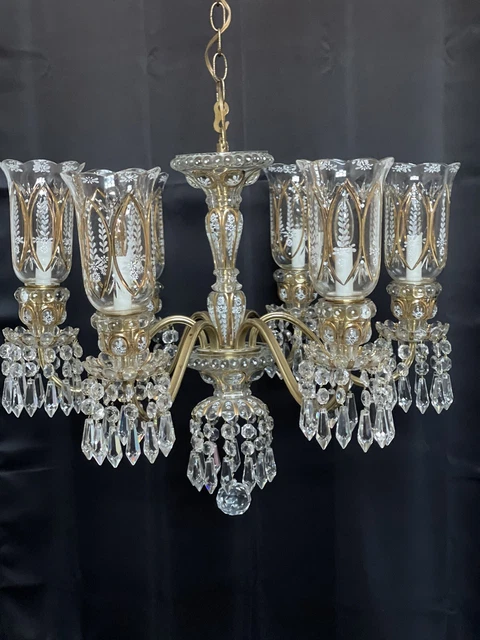
Vintage Hurricane Lamp
The 'Gone with the Wind' lamp, two glass globes painted with roses on a metal stand, was named after the 1939 film, but the lamps themselves are older: American kerosene parlor lamps of about 1880–1910. Hurricane glass itself began as a simple tall shade to protect a candle flame from wind on terraces and ships.
1860–1930
Typical asking price on live listings
about $89
Median of current eBay asking prices (via PicClick); listings run from $2.5 to $5,950. Asking prices are not sold prices.
Expert tip
Lift the chimney and read the burner's wick-winder knob or gallery: names such as 'P&A', 'Kosmos', 'Duplex' or 'B&H' are stamped there and help date the lamp; a drilled base with an electric socket in place of the burner means a later conversion.
History
- Kerosene lamps replaced oil and candles in American and European homes from the 1860s; painted double-globe parlor lamps peaked around 1890–1910.
- The nickname 'Gone with the Wind' lamp comes from the 1939 film; many lamps were electrified in the 20th century, and reproductions were made from the 1960s.
Where it comes from
Mostly American and English: Victorian kerosene parlor lamps came from Connecticut makers such as Bradley & Hubbard (Meriden) and Plume & Atwood (Waterbury), with German Kosmos and English Duplex burners; France made the photophore, a glass hurricane shade over a candlestick, and lampes à pétrole.
Details to look at
- The burner and wick winder, with maker's name.
- The globes and font: painted, cased or pressed glass.
- Base metal: cast iron, brass, spelter.
The market: most wanted
- Painted double-globe parlor lamps with original burners.
- Bradley & Hubbard and Plume & Atwood lamps in brass.
- Matching pairs of French photophores in blown glass.
Authenticity: period piece or reproduction?
- Painted globes from the period have hand-painted decoration with brush strokes visible.
- Old glass shows bubbles and slight unevenness.
- Burners are stamped with maker's names and patent dates.
- Warning signs: decal decoration, new electrical fittings marketed as original, and reproduction globes from the 1960s–70s.
Where to buy
- In France, Leboncoin and regional brocantes for lampes à pétrole and photophores; L'Isle-sur-la-Sorgue for pairs.
- In the US, eBay, Etsy and antique malls for Victorian parlor lamps; replacement chimneys and burners are available from specialists.
Buyer's checklist
- Burner maker
- Globe originality
- Electric conversion
- Chips
Facts
- Typical size
- H 40–80 cm · globe Ø 15–30 cm
- Weight
- 2–8 kg
- Period
- 1860–1930
- Materials
- Glass, brass, cast iron, spelter
- US search interest
- 140 searches a month
Collector interest
Search demand for hurricane lamp reaches 140 US searches a month across 13 distinct queries.
The styles people attach to it most are victorian (40).
Material searches favour crystal (20), brass (10).