Lamps & Shades · identification & value
Vintage Fairy Lamp
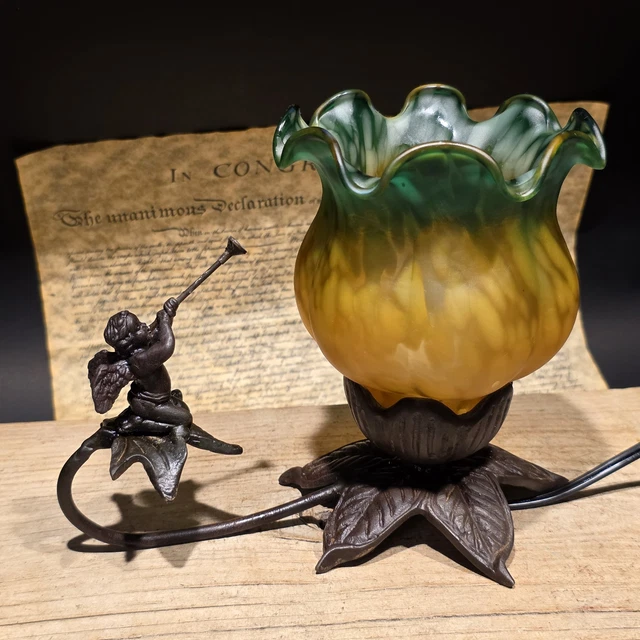
In the 1880s the London candle maker Samuel Clarke sold a short, slow-burning candle and a small glass dome to put over it, and called it the fairy lamp. Victorian households set them along mantelpieces, in conservatories and on dinner tables. The best had shades of coloured, frosted or satin glass from English art glass makers.
1880–1920
Typical asking price on live listings
about $60
Median of current eBay asking prices (via PicClick); listings run from $2.5 to $3,000. Asking prices are not sold prices.
On eBay (via PicClick), 80 listings for “antique french fairy lamp” median asking price $100; median 4 watchers per listing.
Expert tip
Look in the base for the candle cup: original Victorian lamps used a clear glass or metal cup marked with Clarke's name ('Clarke's Fairy' or 'Clarke's Pyramid'), and finding it confirms an early lamp.
History
- Samuel Clarke introduced his fairy lamps and pyramid candles in the 1880s.
- Thomas Webb and other Stourbridge glassmakers supplied art glass shades in the late 19th century.
- Later fairy lamps were made into the 20th century, including mid-century American and Japanese versions.
Where it comes from
Not French: fairy lamps are English, made for Samuel Clarke of London from the 1880s, with glass shades from Stourbridge and Birmingham glasshouses such as Thomas Webb; many later versions came from Bohemia and, from the mid-20th century, the US and Japan.
Details to look at
- The shade: art glass, satin glass, Burmese, cranberry, frosted or moulded.
- The base: matching glass, metal stand or epergne.
- The candle cup and any Clarke markings.
The market: most wanted
- Thomas Webb Burmese glass fairy lamps.
- Multi-light epergne fairy lamps with several shades.
- Lamps with original Clarke's candle cups and matching bases.
Authenticity: period piece or reproduction?
- Victorian art glass is mouth-blown, with a pontil mark under the shade or base.
- Satin and Burmese glass have a soft, velvety surface and subtle colour shading.
- Clarke-marked cups and bases help date the lamp; later versions are often unmarked.
- Warning signs: moulded modern glass with a seam, bright new colours, and bases that do not fit the shade.
Where to buy
- In France, fairy lamps are rare at brocantes; look on Leboncoin and Catawiki for English art glass.
- In the US and UK, eBay and Etsy for single lamps; UK antique fairs and specialist glass dealers for Webb and Burmese examples.
Buyer's checklist
- Chips and cracks
- Shade and base match
- Candle cup
- Maker marks
Facts
- Typical size
- H 8–15 cm · Ø 7–12 cm (epergnes up to 40 cm)
- Weight
- 150–600 g
- Period
- 1880–1920
- Materials
- Art glass, satin glass, Burmese glass, cranberry glass, brass, silver plate
- US search interest
- 6,230 searches a month
Collector interest
Fairy lamp draws 6,230 monthly US searches, split into 8 keyword variants.