Planters, Pots & Urns · identification & value
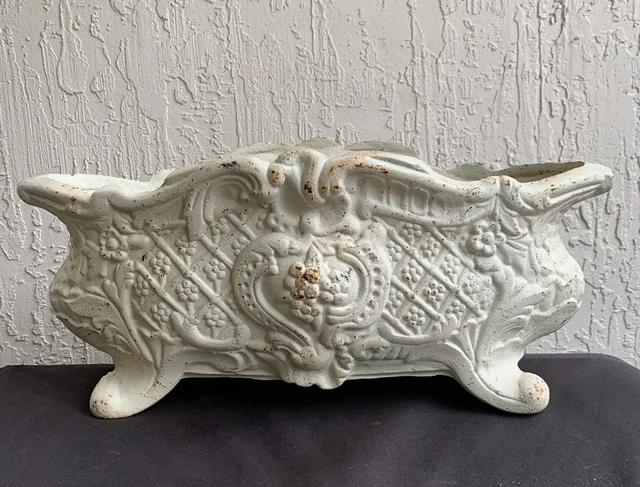
Antique Garden Planter
At Versailles, André Le Nôtre's orange trees spent summers outside in wooden planter boxes with iron frames, wheeled back to the Orangerie in winter. The 'caisse de Versailles' is still made, alongside the green and amber glazed Anduze vases, one of the most recognizable French garden objects.
1700–1940
Expert tip
On an Anduze vase, look for the potter's stamp pressed into the clay near the rim or on a garland medallion, then examine the glaze: old pots have softly worn drips of green, amber and manganese brown, and lichen and salt bloom on the unglazed lower body.
History
- Anduze pottery with its characteristic green, yellow and brown glaze has been made since the 17th century, according to tradition.
- The caisse de Versailles was designed for the orangerie at Versailles in the 17th century.
- Val d'Osne and Durenne foundries produced cast-iron urns and garden ornaments from the mid-19th century.
Where it comes from
Anduze (Gard) for glazed terracotta vases d'Anduze; Biot (Alpes-Maritimes) for large jars; Val d'Osne and Durenne (Haute-Marne) for cast-iron urns; Versailles for the caisse de Versailles planter box.
Details to look at
- Glaze pattern and garlands on Anduze vases.
- Foundry marks on cast-iron urns.
- Wooden panels and iron frames on Versailles boxes.
The market: most wanted
- 19th-century Anduze vases stamped near the foot, with worn green-and-amber flamed glaze.
- Val d'Osne cast-iron urns with foundry marks.
- Original Versailles planter boxes with old iron frames.
Authenticity: period piece or reproduction?
- Old Anduze vases are hand-thrown, with garlands and medallions applied by hand, so the decoration is never perfectly symmetrical; the unglazed foot is weathered and stained.
- Val d'Osne and Durenne castings carry the foundry name cast on the socle or the base rim, and old cast iron rusts at chips and breaks with a grey, granular fracture.
- Original caisses de Versailles have removable or hinged side panels held by iron hooks, so the tree's roots could be pruned, and oak boards with old paint.
- Warning signs: moulded pots with crisp identical garlands and artificial 'moss' paint, unmarked thin cast-iron urns from new foundries and Versailles-style boxes in pine with fixed sides.
Where to buy
- Anduze potteries and Provençal garden dealers for old and new vases; Saint-Ouen, salvage yards and Leboncoin for cast-iron urns and planter boxes.
- 1stDibs, Chairish and garden antique dealers in the US and UK; check frost resistance before leaving terracotta outside.
Buyer's checklist
- Glaze
- Frost damage
- Foundry mark
- Weight
Facts
- Typical size
- H 40–120 cm · Ø 30–90 cm
- Weight
- 15–150 kg
- Period
- 1700–1940
- Materials
- Terracotta, glaze, cast iron, oak, iron
- US search interest
- 100 searches a month
Collector interest
Garden planter draws 100 monthly US searches, split into 11 keyword variants.
The styles people attach to it most are rustic (30).
Origins in the queries: french (10).