Planters, Pots & Urns · identification & value
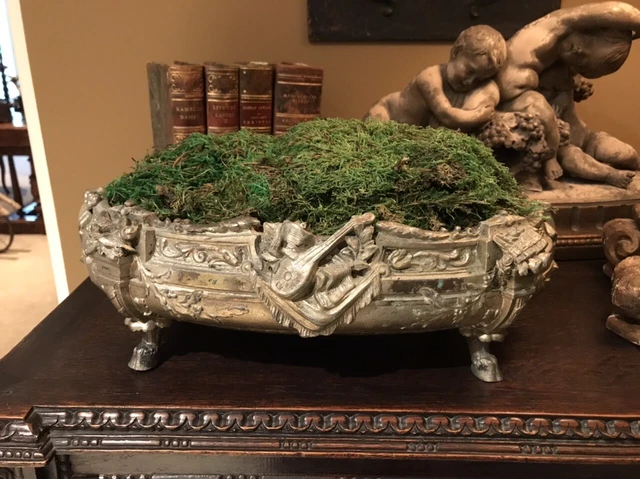
Antique Jardinière
The 19th-century passion for indoor palms and ferns needed somewhere to live: in the winter garden, on a pedestal in the salon, beside the piano. French potteries answered with jardinières in every taste, from Renaissance-style faience to dripping barbotine glazes covered in modelled leaves and birds.
1860–1930
Guide price (US$)
$60 – $300 – $2,000
low · typical · high, dealer level
Price tip: under $60 is a bargain worth checking twice; above $2,000, ask for provenance or a maker's mark.
Verified market data (US$)
$110 – $990 – $30,800
lowest · median · highest observed
French dealers asking on Proantic: €100–28 000 (median €900, 58 listings). (Proantic prices converted to USD at 1 EUR = $1.10.)
Expert tip
Check the base: French faience jardinières are usually stamped (Sarreguemines, Gien, Onnaing) and a period piece shows a dry, unglazed foot ring with old grime; a drainage hole drilled through the glaze is a later alteration.
History
- Faience and majolica jardinières were produced in quantity from the 1860s to around 1914, with Sarreguemines, Gien and the potteries of the Nord leading production.
- Cast-iron jardinières and urns from Haute-Marne foundries and Napoleon III marquetry planter stands belong to the same period.
Where it comes from
Sarreguemines (Lorraine), Gien (Loiret), Choisy-le-Roi and Onnaing (Nord) for faience and barbotine jardinières; Vallauris for Delphin Massier's majolica; Haute-Marne foundries for cast iron.
What sets the price
Material, stand.
Details to look at
- Glaze: majolica colours, craquelure and wear at the rim.
- Matching stand or pedestal, often sold separately and worth as much again.
- Handles, feet and modelled decoration (masks, flowers, birds) for chips and restoration.
The market: most wanted
- Barbotine jardinières by Delphin Massier and other Vallauris potters.
- Large Sarreguemines and Gien pieces on their original pedestals.
- Signed cast-iron jardinières and Napoleon III marquetry planters.
Authenticity: period piece or reproduction?
- Stamped marks should be impressed into the clay or under the glaze, not painted over it.
- Old majolica shows fine crazing and slight colour pooling; restored areas feel warm and look matte under raking light.
- Cast iron should show casting seams and foundry marks, with weight to match.
- Warning signs: very bright uniform glazes, no crazing anywhere, glued handles, and resin 'cast iron' that sounds hollow when tapped.
Where to buy
- Regional brocantes, Leboncoin and L'Isle-sur-la-Sorgue for faience; Proantic and Saint-Ouen for majolica and cast iron.
- In the US, eBay, Etsy and Chairish for French and English jardinières. The guide range is $60–2,000.
Buyer's checklist
- Chips and restoration
- Maker's mark
- Stand present
- Drilled holes
Facts
- Typical size
- H 15–50 cm · W 25–60 cm
- Weight
- 2–15 kg (ceramic) · 15–60 kg (cast iron)
- Period
- 1860–1930
- Materials
- Faience, majolica (barbotine), stoneware, cast iron, wood marquetry
- US search interest
- 3,040 searches a month
Collector interest
US shoppers type 3,040 searches a month about jardiniere, spread over 17 keyword variants.
The materials buyers name are ceramic (280), cast iron (110), brass (20).
Origins in the queries: french (30).