Brocante & Vintage Finds · identification & value
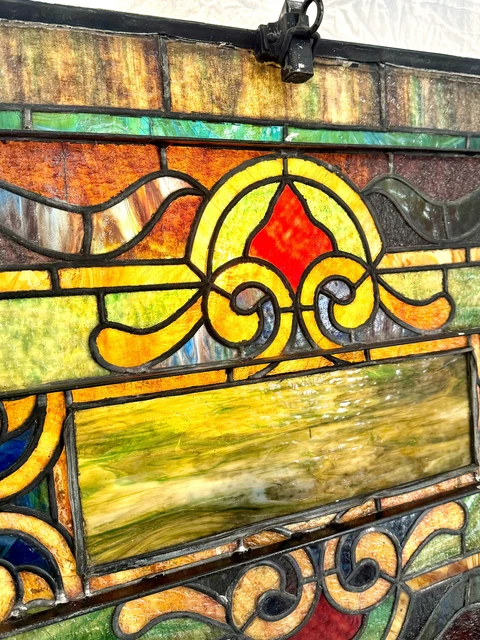
Stained Glass Window
The chapel window came out whole when the church was deconsecrated: lead came, painted faces, the patron's coat of arms at the base — crated by the salvage dealer and re-hung in a living room or a restaurant.
1860–1940
Verified market data (US$)
$132 – $1,650 – $38,500
lowest · median · highest observed
French dealers asking on Proantic: €120–35 000 (median €1 500, 60 listings). (Proantic prices converted to USD at 1 EUR = $1.10.)
Expert tip
Look at the lead lines against the light: hand-drawn came flatters and widens along its run, and the glass shows seed bubbles — a window with machine-perfect came and flat clear glass is a modern glazing in old clothes.
History
- French ecclesiastical workshops built and repaired stained glass through the 19th and 20th centuries.
- Deconsecrations and war damage released complete windows into the salvage trade.
- Civil Art Deco studios glazed cafés and villas with the same techniques.
Where it comes from
French stained-glass workshops — the ecclesiastical trades of every diocese — built the complete windows that salvage houses now sell panel by panel.
Details to look at
- Hand-drawn lead came flattered at every joint.
- Painted glass details fired into the surface — faces, drapery, letters.
- Armature bars and crating marks of the salvage trade.
The market: most wanted
- Complete chapel windows with figure painting.
- Art Deco civil windows with geometric leading.
- Fragments and roundels for the smaller budget.
Authenticity: period piece or reproduction?
- The fired paint is part of the glass surface — it does not scratch off.
- Came joints are soldered both faces with hand-finished beads.
- Warning signs: cold-painted glass, silicone-set panels, and 'antique' windows with modern float glass at the centres.
Where to buy
- French stained-glass workshops and architectural salvage; US importers crate and ship complete windows.
- Buy the window that fits your wall — and insist on rigid crating, because lead bends and glass breaks.
Buyer's checklist
- Came hand-drawn
- Paint fired
- Complete panels
- Crating offered
Facts
- Typical size
- Windows 40 × 100 cm to 120 × 250 cm
- Weight
- 5–40 kg
- Period
- 1860–1940
- Materials
- Coloured and painted glass, hand-drawn lead came, armature
- US search interest
- 300 searches a month
Collector interest
Search demand for stained window reaches 300 US searches a month across 10 distinct queries.
By style, searches lean to victorian (30).
Material searches favour glass (300).