Chests & Trunks · identification & value
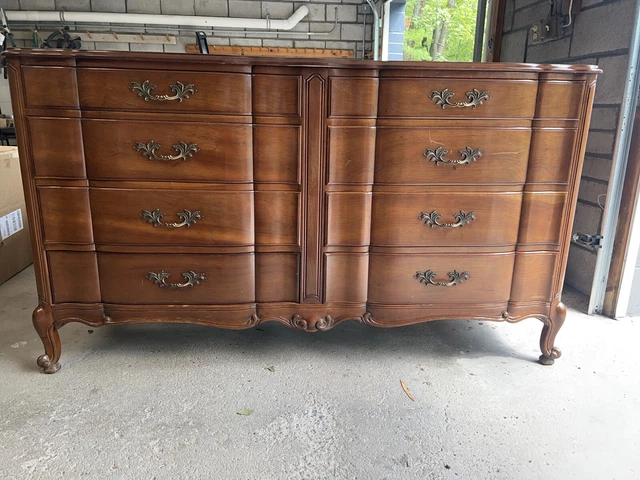
Antique Chest
For centuries the coffer was the main piece of furniture in a French home: a box for linen, clothes and documents, which could be carried and locked. In Brittany it was carved with geometric patterns and spindles; in the Alps, with rosettes cut by the shepherds in winter. In the 19th century, as railways and steamships took the rich on long journeys, Paris trunk makers like Louis Vuitton (from 1854) made flat-topped trunks that could be stacked.
1650–1950
Verified market data (US$)
$308 – $1,430 – $6,600
lowest · median · highest observed
French dealers asking on Proantic: €280–6 000 (median €1 300, 60 listings). (Proantic prices converted to USD at 1 EUR = $1.10.)
On eBay (via PicClick), 91 listings for “antique french chest” median asking price $1,750; median 7 watchers per listing.
Expert tip
On a travel trunk, match the serial number stamped on the lock with the number on the maker's label inside; on a wooden coffer, look underneath for hand-sawn boards and old iron nails.
History
- Wooden coffers were the dominant storage furniture in France until the armoire spread in the 17th and 18th centuries.
- Louis Vuitton opened in Paris in 1854; Goyard and Moynat were also major Paris trunk makers in the 19th century.
- Apothecary chests and lingerie chests with many drawers were made in the 19th and 20th centuries.
Where it comes from
Brittany, the Alps (Queyras) and the Basque Country for carved wooden coffers; Provence for the bread trough (maie or pétrin); Paris (Asnières) for luxury travel trunks by Louis Vuitton, Goyard and Moynat; the US for sugar chests and apothecary chests.
Details to look at
- Construction: pegged boards, dovetails or nailed planks.
- Hardware: hand-forged iron, brass corners, locks.
- Labels, serial numbers and stencilled initials on trunks.
The market: most wanted
- Alpine (Queyras) and Breton carved coffers of the 17th and 18th centuries.
- Louis Vuitton, Goyard and Moynat trunks with intact labels, matching lock numbers and original canvas.
- Provençal walnut maies, and complete apothecary or lingerie chests with all their drawers.
Authenticity: period piece or reproduction?
- Old coffers have hand-sawn or riven boards, tool marks inside, and forged iron hinges set with old nails.
- On a signed trunk, the lock number, the label and the style of canvas pattern should all match the period.
- Canvas on old trunks shows wear, old repairs and fading; the wooden slats and brass fittings are worn by handling.
- Warning signs: new wood stained dark, reproduction labels glued into old trunks, and repainted or replaced canvas.
Where to buy
- In France, the Puces de Saint-Ouen for travel trunks, regional brocantes in Brittany and the Alps for coffers, Drouot and Proantic for signed trunks and fine coffers.
- In the US and UK, 1stDibs and Chairish for luxury trunks and French coffers, eBay and Etsy for steamer trunks and apothecary chests.
Buyer's checklist
- Lock and key
- Hinges
- Bottom boards
- Labels
Facts
- Typical size
- L 60–150 cm · H 40–80 cm · D 40–70 cm
- Weight
- 15–80 kg
- Period
- 1650–1950
- Materials
- Oak, walnut, chestnut, pine, iron, brass, canvas, leather
- US search interest
- 5,870 searches a month
Collector interest
Search demand for chest reaches 5,870 US searches a month across 157 distinct queries.
The styles people attach to it most are farmhouse (190), art deco (100), chinoiserie (70), french country (50).
Most-searched materials: wicker (360), wood (150), rattan (140), brass (70).