Decorative Objects & Brocante Finds · collecting guide
Vintage Bookends
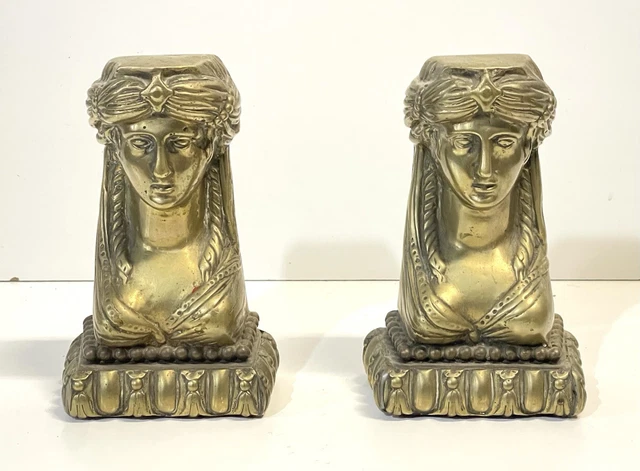
Bookends support books using weight, a projecting base or a combination of both. Vintage examples may be made from metal, stone, wood or ceramics. Their construction and contact surfaces matter as much as the decorative subject.
What to examine first
- Check the underside for chips, sharp edges and failing pads.
- Compare the two pieces for casting, size and finish differences.
- Assess stability with an empty shelf before placing books beside them.
Names you may encounter
book ends, paired ornaments, metal bookends, marble bookends.
These terms help describe an object. They are starting points for research, not a certificate of age, origin or authenticity.
Related subjects
Research notes in this guide
- Rookwood bookends: a museum raven and a continuing ceramic tradition
Ceramic bookends can belong to a factory tradition that continues long after an early model was produced.
- Isidore Konti’s bronze bookend as a small sculpture
Figural bookends bring the language of sculpture to a practical object. Pose, base and contact surfaces help explain how the figure participates in the design.
- Marble-composite bookends: why stone content does not mean carved stone
A bookend can contain natural marble while being made by casting. Modern examples provide a useful material comparison when assessing older-looking ornaments.
- Frederick Carder glass bookends: a signature reproduced in the casting
A signature can enter a glass object through its model rather than being cut into each finished example. Frederick Carder’s bookends make that distinction explicit.
- Animal bookends in carved wood: reading a design illustration
Animal forms can turn a book support into a small sculpture.
- Burwood bookends: a wood-like surface made from a composite
A carved-looking brown bookend is not necessarily carved from solid timber.
- Classical bookends and modern museum-inspired design
An architectural-looking bookend can be a recent interpretation of historical forms.
- Bookends in a desk ensemble: André Fau’s faience design
Art Deco bookends could participate in a wider desk arrangement rather than serve only as isolated sculptures.
- Bookends and bindings: separating sculpture from shelf support
Art Deco bookends can be admired as sculpture, but using an old bookend beside valuable books introduces a second question: what support does the binding actually receive?
- Commemorative bookends: when a shelf records a public event
A search for art deco bookends can uncover objects whose main subject is an event or a public figure. Their interest lies partly in the way a news story entered the home.
- Art Deco bookends: sculpture, support and matching pairs
Art Deco bookends combine a decorative front with the practical task of supporting books.
Encyclopedia entries: identification & prices
All entries in Desk & Writing.