Toys & Games · identification & value
Antique Chess Set
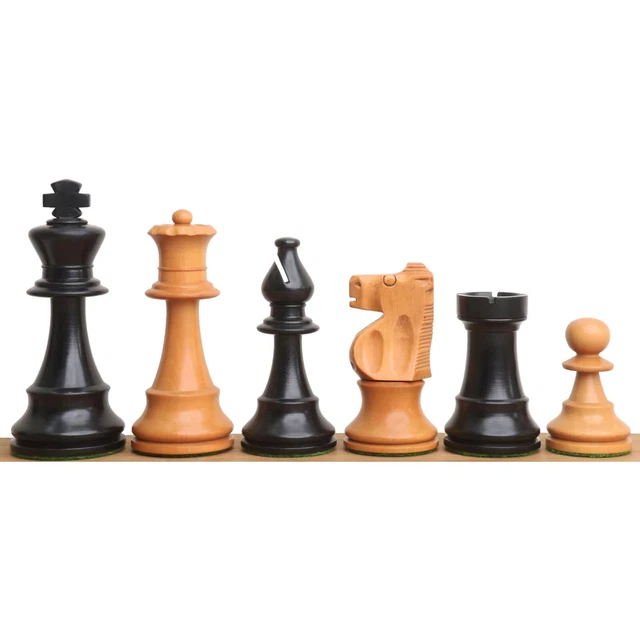
In 18th- and 19th-century Paris, the Café de la Régence was the capital of chess: Philidor played there, and later Morphy. The pieces on its tables, a slim French design now called the Régence pattern, were the European standard until a London firm launched the sturdier Staunton set in 1849.
1800–1940
Verified market data (US$)
$99 – $1,210 – $49,500
lowest · median · highest observed
French dealers asking on Proantic: €90–45 000 (median €1 100, 60 listings). (Proantic prices converted to USD at 1 EUR = $1.10.)
Expert tip
Look at the end grain on the base of an ivory or bone piece with a loupe: elephant ivory shows fine criss-cross Schreger lines, bone shows tiny dark pores and channels, and plastic shows nothing. Remember that buying or exporting elephant ivory is heavily restricted in the US and UK.
History
- The Staunton pattern was registered in 1849 and sold by Jaques of London; it gradually replaced the French Régence pattern in competition.
- Josef Hartwig designed his geometric Bauhaus chess set in 1924; Catalin and Bakelite Art Deco sets were made in the US in the 1930s and 40s.
Where it comes from
Paris for the Régence pattern named after the Café de la Régence; Dieppe for carved ivory and bone sets; London (Jaques) for the Staunton pattern; Germany for Josef Hartwig's Bauhaus set; the US for 1930s Catalin and Bakelite Art Deco sets.
Details to look at
- Pattern: Régence (slender, turned, knight with simple head), Staunton (weighted, carved knight), or geometric Art Deco.
- Material: boxwood and ebony, ivory, bone, Catalin or Bakelite, metal.
- Board: marquetry with inlaid squares, or folding boards; boxes with sliding lids.
The market: most wanted
- Jaques Staunton sets with the 'Jaques London' stamp under the king and a crown stamp on rook and knight.
- 19th-century French Régence sets in boxwood and ebony, and Dieppe carved ivory sets (subject to ivory law).
- Hartwig Bauhaus sets and colourful Catalin Art Deco sets in original boxes.
Authenticity: period piece or reproduction?
- Old boxwood darkens to honey with fine shrinkage cracks; ebonised pieces show light wood at chips.
- Weighted Staunton pieces have lead plugs under felt or leather bases.
- Catalin has a warm, translucent glow and turns yellow with age; modern resin is too clean and light.
- Warning signs: modern Indian or Chinese Staunton copies with fake Jaques stamps, missing pawns replaced by mismatched pieces, and ivory sold without legal documentation.
Where to buy
- Drouot, Catawiki and Saint-Ouen for Régence and Jaques sets; Leboncoin and brocantes for French boxwood sets and boards.
- In the US and UK, eBay, Etsy and specialist chess dealers; 1stDibs for Art Deco sets; check legal rules before buying ivory.
Buyer's checklist
- Count of pieces
- Material test
- Maker stamps
- Ivory rules
Facts
- Typical size
- King H 7–11 cm · boards 40–55 cm square
- Weight
- Set 0.5–2 kg; board 1–5 kg
- Period
- 1800–1940
- Materials
- Boxwood, ebony, ivory, bone, Catalin, Bakelite, marquetry
- US search interest
- 220 searches a month
Collector interest
Chess draws 220 monthly US searches, split into 9 keyword variants.
The styles people attach to it most are art deco (110).