Dressers & Commodes · identification & value
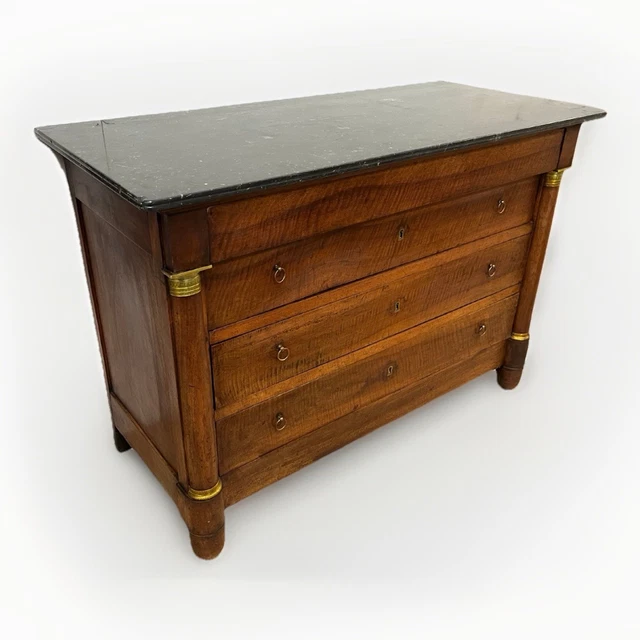
Antique Commode
Around 1700 Parisian cabinetmakers had an idea that changed bedroom furniture: replace the heavy chest with a low cabinet of drawers that a servant could open without lifting a lid. They called it a commode, a convenient piece, and within a generation every château wanted one.
1720–1850
Guide price (US$)
$1,000 – $3,500 – $15,000
low · typical · high, dealer level
Price tip: under $1,000 is a bargain worth checking twice; above $15,000, ask for provenance or a maker's mark.
Verified market data (US$)
$308 – $3,850 – $132,000
lowest · median · highest observed
French dealers asking on Proantic: €280–120 000 (median €3 500, 60 listings). (Proantic prices converted to USD at 1 EUR = $1.10.)
Expert tip
Pull out a drawer completely and check the dovetails: hand-cut ones are uneven and fewer in number.
History
- Paris ébénistes made veneered and marquetry commodes with gilt-bronze mounts and marble tops, often stamped with their name after 1751 rules required it.
- Provincial makers in Bordeaux, Lyon and Provence built solid walnut and fruitwood versions with serpentine or bombé fronts, which are the commodes most associated with French country style.
Where it comes from
Paris for veneered and stamped pieces; Bordeaux, Lyon and Provence for solid walnut provincial commodes.
What sets the price
Marble top, bombé shape, mounts, ébéniste stamp.
Details to look at
- Check the drawers: hand-cut dovetails, oak linings and wear on the runners indicate age.
- Original handles leave a single set of holes; extra holes mean the hardware has changed.
- A stamp on the top rail (estampille) and an original marble top raise the price considerably.
The market: most wanted
- Stamped Paris commodes by known ébénistes with gilt-bronze mounts and original marble tops.
- Bordeaux and Provençal bombé walnut commodes with original hardware.
- Louis XV period commodes with serpentine fronts.
Authenticity: period piece or reproduction?
- Hand-cut dovetails, oak drawer linings and wear on the runners.
- Original handles leave a single set of holes.
- An estampille (maker's stamp) and guild mark (JME) on the top rail.
- Warning signs: machine dovetails, plywood, extra handle holes and new marble.
Where to buy
- Proantic and Saint-Ouen for stamped Paris pieces; regional dealers and Catawiki for provincial walnut commodes, often €400–1,500.
- US dealers ask $1,000–15,000 depending on maker and condition.
Buyer's checklist
- Hand-cut dovetails
- Single set of handle holes
- Stamp on the top rail
- Original or replaced marble
Facts
- Typical size
- H 80–90 cm · W 100–135 cm · D 50–65 cm
- Weight
- 50–100 kg
- Period
- 1720–1850
- Materials
- Walnut, fruitwood, oak; veneers and marquetry; marble top; gilt-bronze or brass mounts
- US search interest
- 660 searches a month
Collector interest
Commode draws 660 monthly US searches, split into 12 keyword variants.
By style, searches lean to art deco (30).
Searches by country of origin: french (320).