Bookcases & Vitrines · identification & value
Antique Bookcase
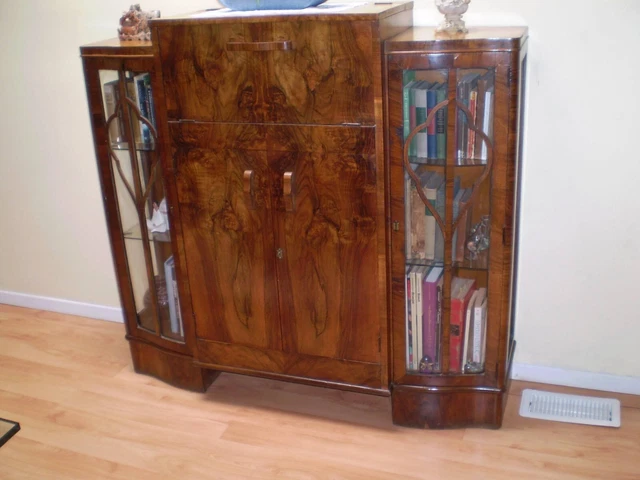
A notary's office, a country doctor's study, a château library: in 19th-century France, books lived behind glazed or grilled doors to keep out dust and mice. Louis-Philippe joiners made tall, plain bookcases in mahogany and walnut, and Napoleon III makers added ebonised wood and brass. In the 1920s, Art Deco designers made the bookcase low and long, with sleek veneers.
1800–1960
Guide price (US$)
$300 – $1,200 – $6,000
low · typical · high, dealer level
Price tip: under $300 is a bargain worth checking twice; above $6,000, ask for provenance or a maker's mark.
Verified market data (US$)
$462 – $2,640 – $31,350
lowest · median · highest observed
French dealers asking on Proantic: €420–28 500 (median €2 400, 60 listings). (Proantic prices converted to USD at 1 EUR = $1.10.)
On eBay (via PicClick), 92 listings for “antique french bookcase” median asking price $3,795; median 7 watchers per listing.
Expert tip
Look at the door fronts: original wire grilles (grillage) or old glass with ripples and small bubbles add value; flat modern glass or new chicken wire means the doors were redone.
History
- Large two-part bookcases (bibliothèques à deux corps) were made from the late 18th century for libraries and offices.
- Louis-Philippe (1830–1848) and Napoleon III (1852–1870) bookcases made the type common in bourgeois homes.
- Art Deco bookcases and étagères (1920–1940) were made by Paris decorators in exotic veneers and lacquer.
Where it comes from
Paris for Louis-Philippe, Napoleon III and Art Deco bibliothèques; provincial joiners in Normandy, Burgundy and the Lyonnais for oak and walnut library cases. The open étagère is a 19th-century Paris form found across Europe.
What sets the price
Maker label, glazed or grilled doors, solid wood, height.
Details to look at
- Doors: original glass, grilles or mesh, and the hardware.
- Shelves: adjustable on wooden strips or iron pegs.
- Cornice and base: whether the piece comes apart in two sections.
The market: most wanted
- Grilled-door bookcases from notaries' offices and libraries.
- Louis-Philippe and Directoire mahogany bookcases.
- Art Deco bookcases and étagères by named Paris designers.
Authenticity: period piece or reproduction?
- Period bookcases come apart in sections, with pegs or bolts; one-piece bodies are often later.
- Old shelves sag slightly and have worn front edges.
- Original locks and keys work smoothly; replaced locks leave filled holes.
- Warning signs: new glass and mesh on an old frame, cut-down height, and 'library' bookcases built from old doors.
Where to buy
- In France, Saint-Ouen and Proantic for grilled and glazed bookcases; regional brocantes and notaries' house clearances for country pieces; Selency for étagères.
- In the US and UK, 1stDibs, Chairish and Round Top. The guide range is $300–6,000.
Buyer's checklist
- Height vs your ceiling
- Doors and glass
- Sections and transport
- Shelves original
Facts
- Typical size
- H 150–250 cm · W 80–200 cm · D 30–50 cm
- Weight
- 40–200 kg
- Period
- 1800–1960
- Materials
- Oak, walnut, mahogany, cherry, exotic veneers, glass, brass, iron mesh
- US search interest
- 9,820 searches a month
Collector interest
Bookcase draws 9,820 monthly US searches, split into 159 keyword variants.
The styles people attach to it most are art deco (500), rustic (350), victorian (330), farmhouse (310).
Most-searched materials: brass (220), glass (100), pine (80), wood (70).